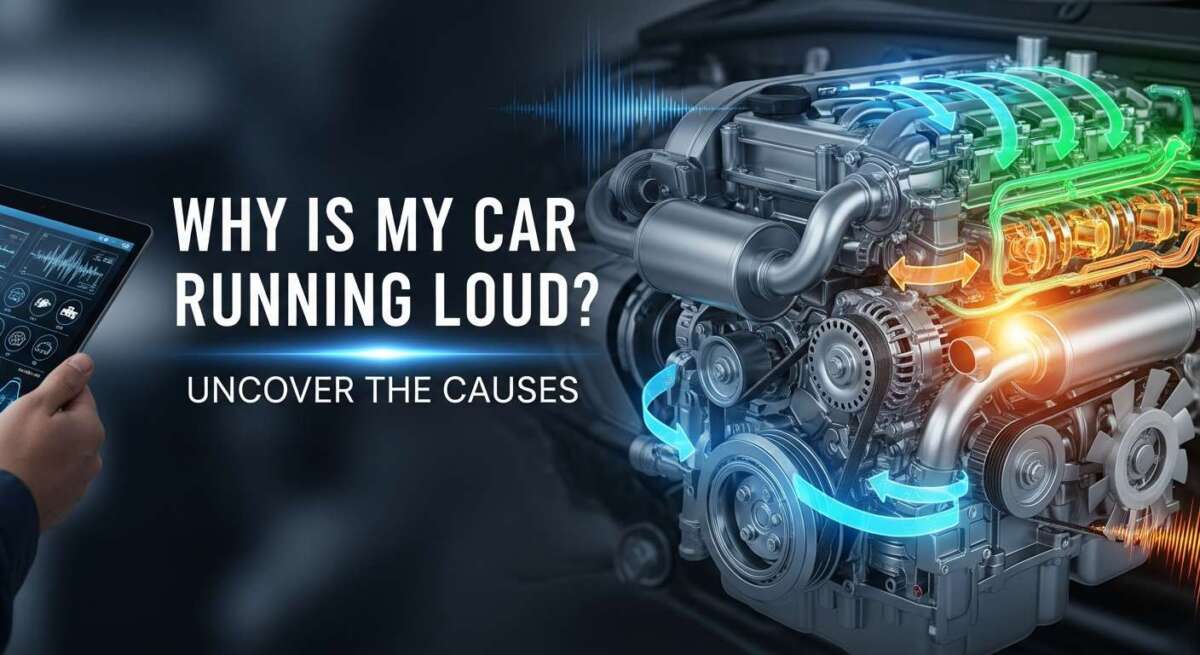
Why is My Car Running Loud? Uncover the Causes
Your car is usually quiet. It hums. It takes you to work. It takes you home. But today, it changed. Now, it roars. It sounds angry. You might feel scared. You might worry about the cost.
Trust me, I know that feeling. I have been there.
Years ago, I had an old red sedan. It was a good car. But one cold morning, I turned the key. ROAR! It sounded like a tank. My neighbors looked out their windows. I felt embarrassed. I felt worried. Was the engine dead? Was it safe?
I looked under the car. I saw a hole. Rust had eaten the muffler. It was a simple fix. But the noise was scary.
You are asking, “Why is my car running loud?” You want answers. You want peace and quiet.
This guide is for you. I will help you find the noise. I will tell you what it means. I will tell you how to fix it. We will solve this together.
Decode the Sound: A Quick Listening Guide
Cars talk to us. They use sound. A happy car hums. A sick car screams, bangs, or clicks.
To fix the car, you must listen. What does the noise sound like? This is the first step.
Here is a quick list. Match your sound to the problem.
1. Car Sounds Like a Tractor or Lawn Mower
This is a loud, deep noise. It usually comes from under the car. It gets louder when you push the gas pedal. This is often an exhaust leak.
2. Loud Humming Noise While Driving
Does the sound change with speed? Does it sound like a plane taking off? This is often a wheel bearing. It could also be bad tires.
3. Squealing Noise When Starting Car
This is a high, sharp sound. It hurts your ears. It happens when the engine is cold. This is usually a loose belt.
4. Grinding Noise When Braking
You press the brake pedal. You hear metal rubbing on metal. This is bad. Your brake pads are gone.
5. Clicking or Tapping
This comes from the engine. It sounds like a fast clock. It speeds up with the engine. This can be low oil.
Do you recognize your sound? Good. Now, let us dig deeper. We will look at each part. We will find the cause.
Is It the Exhaust? Identifying Exhaust Leak Symptoms
Most loud cars have exhaust problems. The exhaust system is a long tube. It takes bad air away from the engine. It also muffles the sound.
If this tube breaks, the noise escapes. It is very loud.
Here are the parts that fail.
The Manifold: Where the Noise Starts
The manifold is on the engine. It collects the gas. It gets very hot. Sometimes, it cracks.
A cracked manifold ticks. It ticks when the engine is cold. As the metal gets hot, the crack closes. The ticking might stop.
But, a bad gasket is louder. The gasket seals the metal. If it breaks, gas shoots out. It sounds like a sputter.
The Catalytic Converter
This part cleans the air. It is very important. But things can go wrong.
Sometimes, the inside breaks. It rattles. It sounds like rocks in a can.
Sadly, people steal these too. If your car suddenly sounds like a race car, check underneath. Is a part missing? If so, someone cut it out. This makes the car incredibly loud.
The Muffler: The Sound Silencer
The muffler is at the back. It is the final trap for noise.
Rust is the enemy here. Water sits inside the muffler. The metal rusts from the inside out.
I remember helping a friend. Her car was loud. We looked at the muffler. It looked fine on the bottom. But on top? There was a giant hole. The sound bounced off the floor of the car. It was deafening inside the cabin.
If your car sounds like a tractor, check the muffler first.
Hangers and Clamps
Pipes hang under the car. Rubber loops hold them up. These loops get old. They break.
When they break, the pipe falls. It hits the frame. Clunk. Bang. Clunk.
This happens on bumpy roads. It is an easy fix. But it sounds terrible.
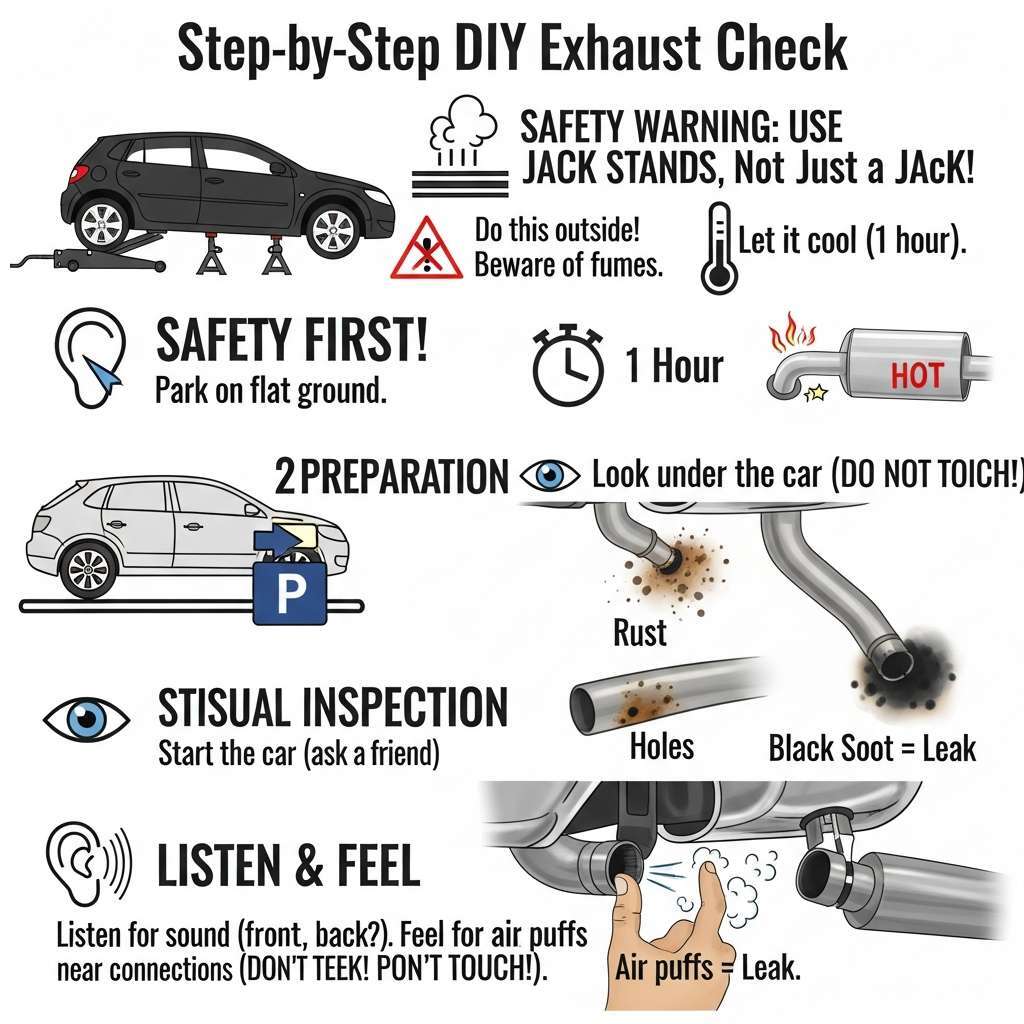
Step-by-Step DIY Exhaust Check
You can check this yourself. But be careful.
- Park the car. Put it on flat ground.
- Let it cool. The exhaust is hot. It burns skin instantly. Wait one hour.
- Look under the car. Do not touch yet. Look for rust. Look for holes. look for black soot. Soot means a leak.
- Start the car. Ask a friend to sit inside. Have them start it.
- Listen. Where is the sound? Is it in the front? Is it in the back?
- Feel for air. Do not touch the pipe. Put your hand near the connections. Do you feel puffs of air? That is a leak.
Safety Warning: Never go under a car that is only on a jack. Use jack stands. Also, be careful of the fumes. Do this outside.
Why is My Car Running Loud Under the Hood?
Maybe the noise is not under the car. Maybe it is in the front. Engine noises are scary. They cost more money to fix.
Let’s look at why your engine is yelling.
Loud Engine Noise When Accelerating
You step on the gas. The engine roars. But it’s not the exhaust.
It could be the air intake. The engine needs air to burn gas. It sucks air through a tube. It goes through a filter.
If the tube cracks, air rushes in. It bypasses the filter. This makes a deep sucking sound. It also hurts your gas mileage.
Also, check the vacuum lines. These are tiny rubber tubes. They get brittle. They crack. A vacuum leak sounds like a high-pitched hiss.
The Serpentine Belt
This belt is a snake. It winds around pulleys. It powers the alternator. It powers the steering.
Rubber gets hard over time. It slips.
Have you heard a squealing noise when starting car? That is the belt. It slips on the metal pulley.
Sometimes, it is just loose. You can tighten it. Sometimes, it is old. You must change it.
I once ignored this sound. I turned up the radio. Then, SNAP. The belt broke. I lost power steering. The battery stopped charging. I was stranded. Don’t be like me. Fix the squeal early.
Low Oil and Lifter Tick
Oil is blood for the car. It keeps parts slippery. It keeps parts cool.
If oil gets low, metal touches metal.
The valves open and close. They need oil. Without it, they tap. Tick-tick-tick-tick.
This sound speeds up. Rev the engine. Does the clicking getting faster? Check your dipstick.
Personal Experience:
I was on a road trip. I drove a van. I heard a ticking sound. I thought it was a leaf in the fan. I kept driving. The sound got louder. It became a clatter.
I stopped at a gas station. I checked the oil. The stick was dry!
I was lucky. I added two quarts of oil. The sound stopped. The engine was safe. If I had driven more, the engine would have died.
Check your oil often. It is simple. It saves your car.
Engine Knocking
This is the worst sound. We call it “Rod Knock.”
It sounds like a hammer. Someone is hitting the engine from inside. KNOCK. KNOCK. KNOCK.
This means a big part is broken. The bearings are gone. The piston is loose.
If you hear this, stop. Do not drive. Tow the car. Driving will destroy the engine completely.
Noises That Happen When You Move
Sometimes, the engine is quiet. The car is still quiet. But when you move, the noise begins. The faster you go, the louder it gets.
These are “rolling noises.” They come from the parts that touch the road. Let’s talk about tires and wheels.
Wheel Bearings: The Deep Growl
Your wheels spin on bearings. These are metal balls in a ring. They are packed with grease. They let the wheel spin smoothly.
But roads are rough. Potholes are mean. Water gets in. The grease dries up. The metal balls get rough.
A bad wheel bearing makes a specific sound. It is a deep, low growl. Or a hum.
How to test it:
Drive on a quiet road. Listen to the hum.
Turn the wheel slightly to the left. Does the noise change?
Turn it to the right. Does it stop?
If the noise changes when you turn, it is a bearing. The weight shifts. It puts pressure on the bad bearing. It gets louder.
Safety Note: A bad bearing can break. The wheel can lock up. Or the wheel can fall off. If you hear a growl that changes with turning, see a mechanic today.
Uneven Tire Wear: The Singing Tire
Tires should be round. They should be smooth.
But sometimes, they wear unevenly. We call this “cupping.” The rubber gets high and low spots. It looks like scallops.
When you drive, air gets trapped in these cups. It makes a rhythmic sound. Womp-womp-womp-womp.
Why does this happen?
- Bad alignment: The wheels point in different directions.
- Bad shocks: The car bounces too much.
- Lack of rotation: You didn’t move tires from front to back.
I had a truck with big tires. I forgot to rotate them. After a year, they howled. It sounded like I was driving a tank on the highway. I had to buy four new tires. It was an expensive mistake.
Rotate your tires every 5,000 miles. It keeps them quiet. It saves you money.
Loose Lug Nuts: A Dangerous Wobble
This is rare. But it happens.
Did you change a flat tire? Did a shop just work on your wheels?
If the nuts are loose, the wheel wobbles. It hits the bolts.
You hear a thudding sound. Thump-thump-thump.
You might feel a shake in the steering wheel.
Action: Stop immediately. Check the nuts. Tighten them with the wrench. Do not drive with loose wheels. It is very dangerous.
Why Does My Car Scream When I Stop?
Brakes are for safety. They stop the car. But they also make noise to warn you.
Do not ignore brake noises. They are telling you something important.
The Wear Indicator: That Annoying Squeak
Brake pads have a secret feature. It is a tiny metal tab.
When the pad gets thin, the tab touches the rotor.
It makes a high-pitched squeak or chirp. Eeek-Eeek-Eeek.
It usually happens when you are not braking. Or just lightly touching the pedal.
This is a warning. It says: “Hey! Change me soon!”
You have time. But not much. Maybe a few weeks. Schedule a brake job.
Metal on Metal: The Grinding Sound
You ignored the squeak. Now you hear a grind.
It sounds like rocks being crushed. It feels rough in the pedal.
This is bad.
The brake pad material is gone. The metal plate is rubbing on the metal rotor.
You are destroying the rotor. You are losing stopping power.
Every time you brake, you spend more money. You are ruining expensive parts.
If you hear grinding, stop driving. Tow the car to the shop.
Stuck Calipers
The caliper squeezes the brakes. Sometimes, it gets stuck. It doesn’t let go.
The brake drags. It creates friction. It gets hot.
You might hear a constant squeal. You might smell burning rubber.
Touch the wheel (not the brake, the wheel rim) after driving. Is one wheel much hotter than the others? That caliper is stuck. It needs repair.
Gears and Whines: Transmission and Drivetrain
The engine makes power. The transmission sends it to the wheels. This system has hundreds of moving parts.
When they complain, they whine.
Low Transmission Fluid
Automatic transmissions need fluid. It is red oil. It pushes the gears.
If the fluid is low, the pump sucks air.
It makes a whining sound. Whirrrrrrrrr.
Does the sound get higher when you rev the engine?
Check the dipstick. (Some new cars don’t have one).
If it is low, add fluid. But ask: Where did it go? You might have a leak.
CV Joints: The Clicking Turn
Front-wheel drive cars have axles. They have joints that bend. These are CV joints.
They are covered by rubber boots. The boots hold grease.
Old rubber cracks. The grease flies out. Dirt gets in.
The joint gets dry. It wears out.
The symptom: You turn the steering wheel all the way. You drive slowly in a circle.
The sound: Click-click-click-click.
A clicking axle can break. If it breaks, the car won’t move. Listen for the click in parking lots. That is where you turn sharply.
How to Diagnose Like a Pro
You have listened. You have guessed. Now, let’s confirm. You don’t need expensive tools to start. You need your ears and some patience.
A Safe Diagnosis Routine
Follow these steps to pinpoint the noise safely.
- Isolate the Variable:
- Does it happen only when moving? (Tires, Bearings, Brakes)
- Does it happen when stopped but the engine is running? (Belts, Exhaust, Engine internals)
- Does it happen when you turn the wheel? (Power steering, CV joints)
- The “Wall Test”:
Find a building with a long wall. Roll down your windows. Drive slowly next to the wall.
The sound will bounce off the bricks. It amplifies the noise.- Drive with the wall on your left. Listen.
- Turn around. Drive with the wall on your right. Listen.
This helps you find which side the noise is on.
- The “Bounce Test”:
Park the car. Push down hard on each corner of the car.
Does it squeak? That is your suspension. Struts or bushings are dry.
When to Call a Pro
I love fixing things myself. But sometimes, you need an expert.
Call a mechanic if:
- The check engine light is flashing.
- You hear deep knocking from inside the engine.
- The brakes are grinding metal-on-metal.
- You see smoke or smell burning.
- The car feels unsafe to steer.
Cost Estimates:
Knowing the cost helps you plan. These are averages (labor + parts).
- Loose heat shield: $20 – $50 (or free if you DIY with a clamp).
- Serpentine Belt: $100 – $200.
- Wheel Bearing: $250 – $400 per wheel.
- Muffler Replacement: $150 – $500.
- Engine Rebuild (for knocking): $3,000+.
Keep Your Ride Quiet: Maintenance Tips
You fixed the noise. Great! Now, keep it quiet. Prevention is cheaper than repair.
1. Regular Oil Changes
Dirty oil kills engines. It causes lifter ticks and rod knocks. Change it every 5,000 miles (or what your manual says). Use the right weight (like 5W-30).
2. Rust Prevention
Rust eats exhausts. If you live where it snows, wash your car often. Wash the underneath. Salt causes rust holes. A clean undercarriage is a quiet one.
3. The “Radio Off” Rule
Once a week, drive with the radio off. No music. No podcasts. Just listen to the car.
You will catch small noises early. A small squeak is cheap to fix. A broken part is expensive.
Frequently Asked Questions
Here are answers to common questions about loud cars.
Why is my car so loud when I step on the gas?
This is usually an exhaust leak. When you accelerate, engine pressure rises. It forces more gas out of the leak. It could be a hole in the muffler or a cracked manifold. Check the exhaust system first.
Can I drive with a loud exhaust?
Technically, yes, the car will run. But it is dangerous. Exhaust fumes (carbon monoxide) can leak into the cabin. It can make you sick or sleepy while driving. Also, it might be illegal due to noise laws. Fix it soon.
Why does my car sound like a race car suddenly?
If it happened overnight, someone might have stolen your catalytic converter. Thieves cut them out to sell the metal. Look under the car. Is a big section of pipe missing? If yes, call the police and your insurance.
Is a loud car illegal?
Yes, in many places. Cities have noise ordinances. Police can ticket you for a “defective vehicle” or excessive noise. If your muffler is broken, you are a target for a fine.
Conclusion
A loud car is stressful. It ruins your peace. It makes you worry.
But now you know. You know that a hiss is a hose. A squeal is a belt. A roar is an exhaust.
You don’t have to be a mechanic to understand your car. You just need to listen.
Action Plan:
- Turn off the music.
- Use the listening guide above.
- Find the source.
- Fix it before it gets worse.
Don’t let a small noise become a big bill. Take care of your car, and it will take care of you. Safe driving!