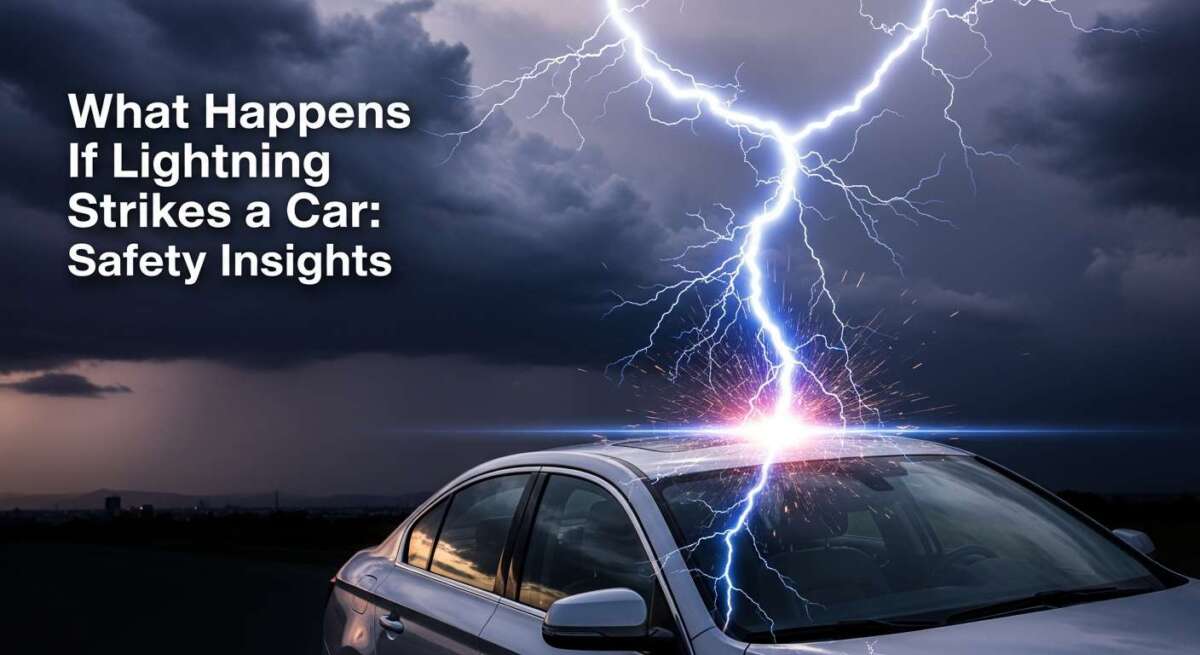
What Happens If Lightning Strikes a Car: Safety Insights
Imagine this. You are driving down a lonely highway. The sky turns a bruised purple color. The wind starts to howl. Suddenly, rain hits your windshield like gravel. You grip the steering wheel tight. Then, BOOM. A flash of white light blinds you. The sound is louder than a gunshot. The air smells like ozone and burnt hair.
You might panic. Did the car just get hit? Are you okay?
I have been there. Years ago, I was driving through Kansas during storm season. The sky opened up. A bolt hit a telephone pole just yards from my hood. My heart hammered in my chest. I wondered, “What happens if lightning strikes a car right now?”
If you are asking that question, you are in the right place. We are going to explore the science, the myths, and the safety tips you need. We will keep it simple. We will keep it clear. And we will keep you safe.
The Big Question: What Happens If Lightning Strikes a Car?
So, what really happens? It is a scary thought. Lightning carries millions of volts of energy. It is hotter than the surface of the sun. When it hits a car, it wants to get to the ground fast.
If you are in a standard car with a metal roof, a few things happen at once.
First, there is a loud crash. You will see a blinding flash. The car might shake.
The lightning bolt hits the top of the car. It might hit the antenna or the roof line.
Then, the energy flows. It moves along the outside of the metal body. It zips down the sides. Finally, it jumps from the car frame to the ground.
It happens in a split second. Most of the time, you will not feel a shock. The car takes the hit for you. It acts like a shield.

Credit: www.reddit.com
The Science Behind the Safety: It’s Not Magic
You might think you are lucky if you survive. But it is not luck. It is physics. This protection has a name. It is called the Faraday cage car lightning protection effect.
Understanding the Faraday Cage Effect
Let’s keep this simple. Imagine a birdcage made of metal. If you send electricity through the cage, the energy stays on the bars. It does not go inside the empty space.
Your car is like that birdcage. The metal frame creates a shell. When lightning hits, the metal conducts the electricity. The current prefers the easy path along the metal skin. It does not want to jump through the air inside the car to get to you.
Why the Current Flows Around You
Electricity is lazy. It takes the path of least resistance. Metal is a great conductor. Your body is a conductor too, but the metal frame is better.
As long as you do not touch the metal frame, the current ignores you. It flows around the “skin” of the car and into the earth.
Busting the Biggest Myth: The Truth About Rubber Tires
We need to talk about a big myth. You have probably heard this one.
“You are safe because of the rubber tires.”
“Rubber stops the electricity.”
This is false.
Does Rubber Protect Cars from Lightning?
Let’s look at the facts. Lightning travels miles through the sky. It jumps through air, which is a very good insulator. If a bolt can jump two miles through the sky, do you think two inches of rubber will stop it?
No way.
The voltage is too high. The lightning will jump right over the tires. It will blow them out. It might even melt them.
The tires do not stop the lightning. The metal roof saves you. The tires are just there to roll on. So, does rubber protect cars from lightning? The answer is a hard no.
Is It Safe to Stay in a Car During Lightning?
This brings us to a vital question. Is it safe to stay in a car during lightning?
The answer is yes, but there is a catch. The car must have a metal roof.
Hardtops vs. Convertibles
If you drive a hardtop sedan, truck, or SUV, you are safe. The metal cage is complete.
But what if you drive a convertible? Even with the top up, you are in danger. The fabric top does not conduct electricity. It has no metal frame over your head.
If lightning strikes a convertible, it can enter the cabin. It can hit you directly.
The same goes for cars made mostly of fiberglass or plastic. If the frame is not metal, the Faraday cage effect will not work.
What About Windows?
Keep them up. Wind and rain can blow in. But more importantly, you want to keep the inside of the car isolated. Don’t lean on the glass. Just sit back and wait it out.
Credit: www.reddit.com
Potential Damage: What Breaks When Lightning Hits?
You might be safe, but your car might not be. Lightning is violent. It leaves a mark. Here are the common car lightning strike damage symptoms.
Exterior Damage
The entry point often shows a burn mark. You might see:
- Pitted metal on the roof.
- Melted antenna tips.
- Peeling paint.
- Shattered glass from the shockwave.
The Electrical System
This is where the real pain happens. A car is full of computers. We call them ECUs.
The huge surge of electricity can fry them.
- Your radio might die.
- The engine computer might short out.
- Fuses will blow instantly.
- Lights might shatter or burn out.
Often, a car hit by lightning will not start. The brain of the car is fried.
Tire Trauma
Remember the current jumping to the ground? It often exits through the wheels. The heat is intense.
The air inside the tire expands fast. Boom. The tire blows out.
Sometimes, the heat melts the rubber. You might see scorch marks on the sidewalls.
Electric Vehicles and Lightning: Are They Different?
We see more electric cars (EVs) on the road now. So, we must ask about electric vehicle lightning safety.
Are they safer? Are they more dangerous?
Generally, they are the same. They have metal frames. They act as Faraday cages. You are safe inside a Tesla or a Chevy Bolt just like a Ford F-150.
The Battery Risk
The main battery in an EV is well insulated. However, the charging system is sensitive.
Never charge your EV during a thunderstorm.
If lightning hits the power grid, it can surge into your car. This can destroy the expensive battery pack.
If you are driving, the car is safe. If you are plugged in, you are at risk.
What to Do If You Are Caught in a Storm
Okay, let’s get practical. You are on the road. The clouds look angry. Thunder is shaking your seat. What do you do?
Step 1: Find a Safe Place
Do not park under a tree. Trees attract lightning. If the tree gets hit, it can fall on you.
Do not park on a hill. Being the highest point is bad.
Look for a low area. Or better yet, find a sturdy building. A garage is best. A gas station canopy is okay, but a walled building is better.
Step 2: Stop the Car
Pull over safely. Turn on your hazards. Turn off the engine.
Step 3: The “Hands in Lap” Rule
This is the most important rule.
Once you stop, put your hands in your lap.
- Do not touch the steering wheel.
- Do not touch the door handles.
- Do not touch the radio or gear shift.
- Do not lean against the door.
Why? Because those parts connect to the metal frame. If lightning hits, a little bit of current can jump from the metal to the handle, then to you.
Sit still. Fold your hands. Wait for the storm to pass.

Credit: www.thedrive.com
After the Strike: Assessing the Damage
Let’s say the worst happens. FLASH. BANG.
Your car was hit. You are alive. You are breathing. The storm moves on. Now what?
Visual Inspection
First, smell the air. Do you smell smoke? If you smell burning plastic or rubber, get out. The car could be on fire.
If there is no fire, wait a few minutes. Let the charge dissipate.
Step out carefully. Look at the tires. Are they flat? Look at the roof. Is it scorched?
Do Not Drive Immediately
Even if the engine starts, be careful. The electronic systems might be damaged. Your airbags could deploy randomly. Your brakes might fail. The steering could lock up.
It is smarter to call a tow truck. Do not risk driving a fried car.
Insurance and Repairs: Will You Be Covered?
Nobody likes dealing with insurance. But you need to know about lightning strike on car insurance coverage.
Does insurance pay for this?
Usually, yes.
Comprehensive Coverage is Key
You need “Comprehensive” coverage. This covers acts of nature. Fire, flood, theft, and lightning fall under this list.
“Collision” coverage pays if you hit another car. It does not cover lightning.
Check your policy. If you have comprehensive insurance, you are likely covered.
Document Everything
Take photos.
- Photo of the burn mark.
- Photo of the blown tire.
- Photo of the storm location.
Tell your agent exactly what happened. “I was driving. Lightning struck the car. Now it won’t start.”
Real-World Experience: When Nature Meets Metal
I want to share a story from a friend of mine, Mark. Mark is a mechanic. He has seen it all.
One day, a customer towed in a pickup truck. The owner said, “I think I got hit by lightning.”
Mark looked at it. The antenna was gone. Just a melted nub remained.
He lifted the hood. The battery had exploded. Plastic was melted everywhere. The computer module looked like toast.
But the driver? He was fine. He said his ears rang for hours. He was shaken up. But not a scratch on him.
Mark fixed the truck. It took weeks. New wiring. New computers. New tires.
It cost thousands of dollars. But the Faraday cage did its job. The truck died so the driver could live.
This is why we respect the storm. We do not fear it, but we respect it.
Conclusion
So, let’s wrap this up.
What happens if lightning strikes a car?
It is violent. It is loud. It can destroy your electronics. It can pop your tires.
But, thanks to science, it will likely leave you safe.
Your car is a metal shield. It guides the deadly energy around you and into the ground.
Remember the rules:
- Stay inside.
- Do not touch metal.
- Pull over safely.
- Know that rubber tires are not magic.
Next time you see those dark clouds rolling in, do not panic. You know the science. You know what to do. You are prepared.
Buckle up. Keep your hands in your lap. And let the car do the work. Stay safe out there.
Frequently Asked Questions (FAQs)
Can lightning kill you in a car?
It is very rare for lightning to kill someone inside a hardtop car. If you touch metal parts connected to the frame, you could get shocked. If you are in a convertible with the top down, you have no protection. But in a closed metal car, you are generally safe from death.
Can I use my phone during a storm in a car?
Yes, you can use a cell phone. Cell phones are wireless. They are not connected to the car’s metal frame. However, do not use a phone that is plugged into the car charger. The surge can travel through the charging cord and burn you or the phone.
Does the car engine stop if hit by lightning?
Yes, the engine often stops. Modern cars use computers to control the engine. A lightning strike sends a huge voltage spike through the wiring. This usually fries the computer instantly. The engine will shut down, and you will lose power steering and power brakes.
How do I know if my car was hit?
You will know. It will be incredibly loud. You might feel a thump. Afterward, look for physical signs. Check for melted plastic on the roof or antenna. Check for black burn marks on the paint. Also, check if your radio or windows stopped working. These are clear signs of a strike.
Do I need to replace my car seats after a strike?
Usually, no. Unless the lightning caused a fire that burned the interior, the seats are fine. The electricity stays on the outside frame. The inside of the car, including the upholstery, typically remains untouched by the current.
Can lightning strike the same car twice?
Yes, it can. The old saying that lightning never strikes the same place twice is a myth. Lightning hits tall, conductive objects. If you are the only car on a high ridge during a storm, you could be hit more than once. Always move to lower ground if safe to do so.