How To Remove Mold From Car Interior Safely: Quick Steps
Mold in a car can be removed safely with PPE, cleaning, drying, and targeted products.
I’ve spent years fixing cars and removing stubborn odors and mold. I know exactly what to look for and which steps work best. This guide walks you through how to remove mold from car interior safely, from simple checks to deep cleaning and prevention. Read on and you’ll get clear steps, safety tips, and real-life advice you can trust.
Why mold grows in car interiors
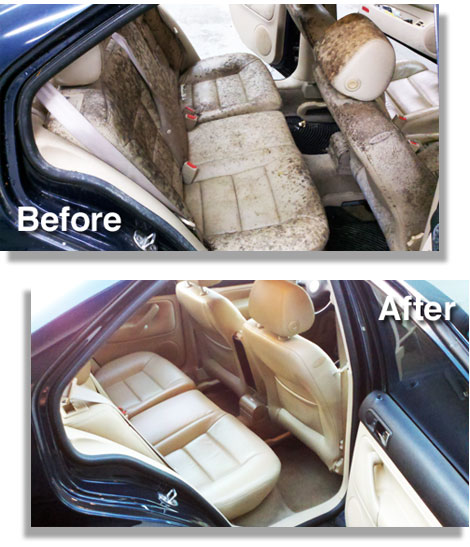
Mold grows where it is dark, damp, and warm. Cars trap moisture from wet clothes, spilled drinks, and leaks. Condensation on windows and soaked floor mats feed mold spores.
Interior materials like carpet, cloth, and foam hold moisture. Leather and plastic are less absorbent but can still get mold on the surface. Old spills and blocked drains make the problem worse. Knowing why mold forms helps you stop it for good.

Health risks of car mold
Mold can trigger coughing, sneezing, and itchy eyes. People with asthma or allergies can get severe reactions. Some molds make irritants called mycotoxins that worsen symptoms.
If you or others feel sick after riding in the car, treat the mold as a health risk and act quickly. Removing mold reduces exposures and improves air quality.

Safety gear and precautions before you start
Wear an N95 mask to avoid breathing spores. Use gloves and eye protection. Work in a well-ventilated area with doors and windows open.
Avoid working alone if you have severe allergies. Keep children and pets away until the car is fully cleaned and dry. Take photos before you start so you can track progress.

Tools and supplies you'll need
- N95 or P100 respirator and safety glasses
- Rubber or nitrile gloves and long sleeves
- Soft brushes, microfiber cloths, and old towels
- Vacuum with HEPA filter or strong suction attachment
- Spray bottles and a bucket
- White vinegar, isopropyl alcohol (70%+), baking soda
- Commercial mold cleaner for automotive interiors (optional)
- Upholstery extractor or wet/dry vacuum for heavy cases
- Fans and portable dehumidifier for drying

Step-by-step: How to remove mold from car interior safely
Follow these steps to remove mold from car interior safely. Work slowly and test cleaners on a hidden area first.
-
Prepare and ventilate
- Park outside in shade. Open all doors and trunk.
- Put on mask, gloves, and glasses.
-
Remove loose items and dry wet areas
- Take out floor mats, seat covers, and trash.
- Dry damp items in the sun or indoors on a rack.
-
Vacuum to remove spores
- Use a HEPA vacuum. Vacuum seats, carpets, and crevices.
- Empty and clean the vacuum canister outside.
-
Clean hard surfaces
- Spray vinegar or 70% isopropyl alcohol on vinyl, plastic, and metal. Wipe with microfiber.
- For heavy spots, scrub gently with a soft brush.
-
Treat upholstery and carpet
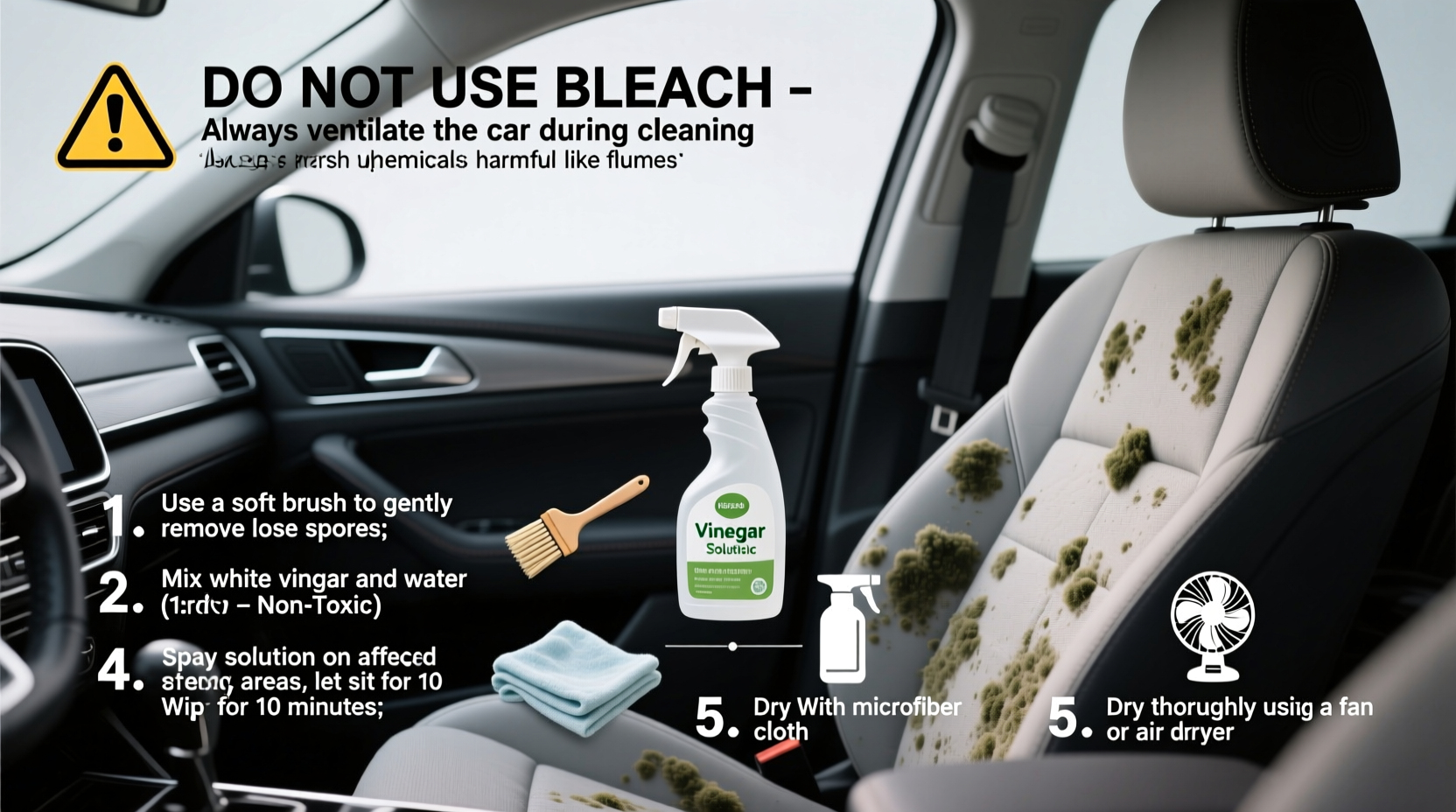
- For light mold, spray a 1:1 mix of white vinegar and water. Blot and air dry.
- For deeper mold, use upholstery cleaner or an extractor. Follow product instructions.
-
Rinse and neutralize odors
- Sprinkle baking soda on carpets and seats. Let sit, then vacuum. Baking soda absorbs odors and moisture.
-
Dry thoroughly
- Run fans and a dehumidifier until everything is bone dry. Use the car’s heater and AC fan to speed drying.
- Don’t seal the car until fully dry; trapped moisture returns mold fast.
-
Inspect and repeat if needed
- Recheck after 24–48 hours. If mold returns, repeat cleaning or call a pro.
These steps show how to remove mold from car interior safely while limiting damage and exposure.
Cleaning solutions: DIY and commercial options
Use safe cleaners that work on the surface and do not harm materials.
-
White vinegar
- Kills many mold types on contact. Safe for most fabrics and plastics.
- Smells strong but fades as it dries.
-
Isopropyl alcohol (70%+)
- Good for non-porous surfaces and quick drying. Avoid on some plastics and dyed fabrics.
-
Baking soda
- Absorbs odor and moisture. Use with vacuuming for best results.
-
Commercial automotive mold cleaners
- Formulated for cars. Read labels for compatibility with leather and suede.
-
Bleach — use with caution
- Effective on non-porous surfaces only. Do not use bleach on upholstery or carpeting because it does not penetrate and can damage fibers. Avoid mixing bleach with other cleaners.
Test each cleaner on a hidden spot. If color changes or surface damage appears, stop and try a different product.
Deep cleaning upholstery, carpets, and vents
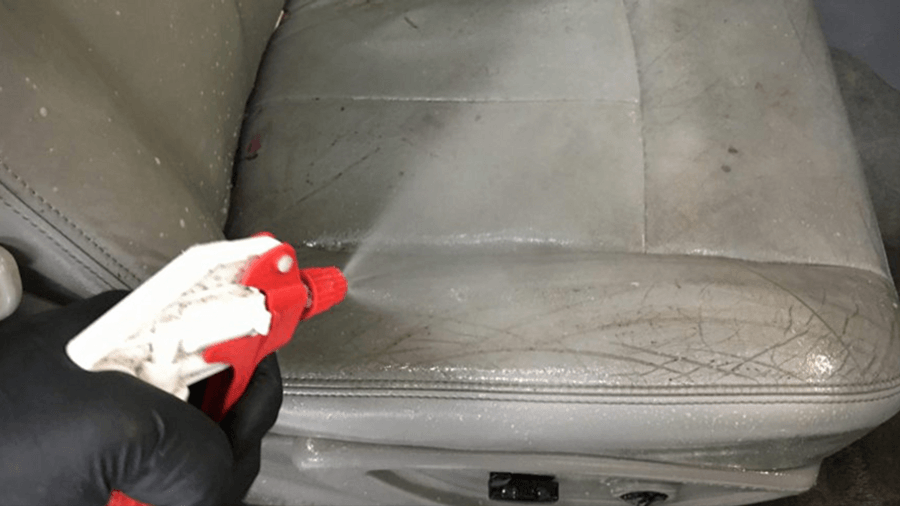
Upholstery and vents hide mold spores. Address them carefully.
-
Carpets and upholstery
- Use an extractor for soaked carpets. Hot water extraction removes deep spores.
- For leather, use a leather-safe mold cleaner and condition afterwards.
-
Seat foam and padding
- If foam smells or is deeply moldy, removal and replacement may be best. Foam retains spores and moisture.
-
Air vents and HVAC
- Run the fan on high with fresh air mode for several minutes to dry the system.
- Clean vent surfaces with alcohol wipes. Consider a professional HVAC cleaning if smell persists.
-
Trunk and under-seat areas
- Check trunk liners, spare tire wells, and under seats for hidden moisture. Clean and dry thoroughly.
Taking time with deep cleaning prevents mold from returning and improves air quality.
Preventing mold return
Prevention is key. Keep the interior dry and aired out.
- Find and fix leaks: doors, windows, sunroof drains, and heater core lines.
- Use moisture absorbers: silica packs or car-specific desiccants.
- Park in dry places or use a car cover in humid climates.
- Avoid leaving wet items inside: umbrellas, jackets, and sports gear.
- Run AC or heat occasionally to circulate air and dry the system.
Two short, common questions people ask:
How long does it take to stop mold growth? Mold can start in 24–48 hours with moisture. Drying and cleaning within that window stops most new growth.
Can I use home cleaners to prevent mold? Yes. Vinegar and baking soda help, but preventing moisture is more effective than cleaning alone.

When to call a professional
Call a professional when mold covers large areas or returns after cleaning. Professionals have tools like industrial extractors, ozone treatments, and HVAC cleaning gear.
If mold compromises foam, wiring, or structural parts, pay for expert help. Professionals can also test for harmful species if you or family members have severe health issues.
My experience and practical tips
I once cleaned a family SUV that smelled like wet basement. I followed the steps here. The trick that mattered most was removing seat cushions and airing them for days. I learned to always test cleaners and to use an extractor for soaked carpets.
Mistakes to avoid: rushing drying, using bleach on fabric, and skipping vents. These lead to repeat mold. Trust the process and dry everything well.
Frequently Asked Questions of How to remove mold from car interior safely
How long does it take to fully remove mold from a car interior?
Light mold can be removed in a few hours with cleaning and drying. Deep infestations may need repeated treatments and a day or more to dry completely.
Is vinegar safe for all car interior materials?
Vinegar is safe on most fabrics, plastics, and vinyl but test on a hidden spot first. Avoid using vinegar on some leather finishes without checking manufacturer guidance.
Can I use bleach to kill mold in my car?
Use bleach only on non-porous surfaces like metal or hard plastic and in well-ventilated areas. Do not use bleach on upholstery or carpets because it can damage fibers and does not reach embedded spores.
Will a professional service guarantee mold won’t return?
A reputable pro will remove current mold and advise fixes to prevent return, but no one can guarantee mold never returns if conditions become damp again. Fixing moisture sources is essential.
Can mold in my car hurt my health long-term?
Mold exposure can worsen asthma and allergies and cause lingering symptoms for sensitive people. Removing mold and improving ventilation reduces health risks quickly.
Conclusion
Mold in a car can be fixed. Start by protecting yourself, finding moisture sources, and using the right cleaners and drying tools. Follow the step-by-step plan here to remove mold from car interior safely and stop it from coming back. Take action now: inspect your car, dry any damp spots, and try the safe cleaning steps. If you found this helpful, share your experience or questions below, or subscribe for more practical car care tips.