How To Remove Hard Water Stains From Car Paint: Quick Fix
Use safe car-safe cleaners, clay bar, and polishing—work slowly and protect the clear coat.
I’ve spent years restoring cars and teaching owners how to remove hard water stains from car paint. I know which methods fix light spots and which ones risk damaging the clear coat. This guide gives step-by-step fixes, safe product choices, prevention plans, and real-world tips so you can restore shine without making the problem worse.
src="https://www.drbeasleys.com/wp-content/uploads/2024/07/Type-3-Water-Spots003.jpg"
alt="What are hard water stains on car paint?"
style="max-width: 100%; height: auto; border: 2px solid black; border-radius: 10px; display: block; margin: 0 auto;”
loading=”lazy”
/>
What are hard water stains on car paint?
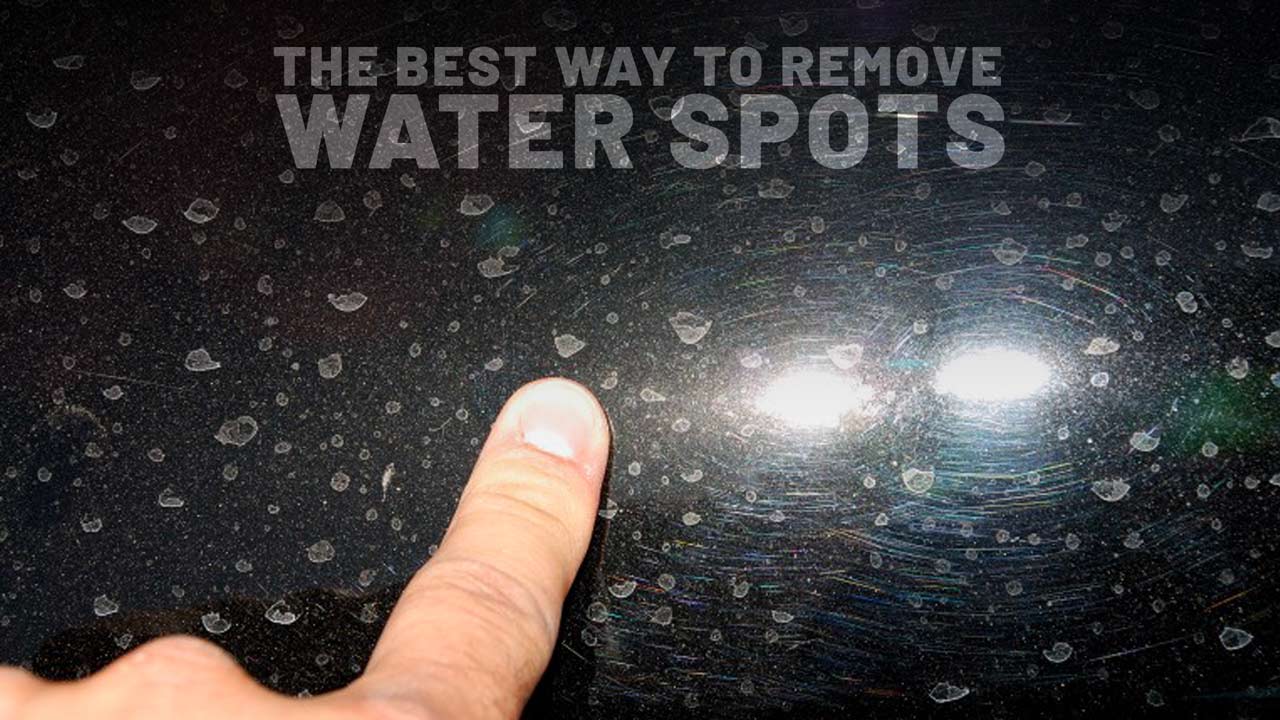
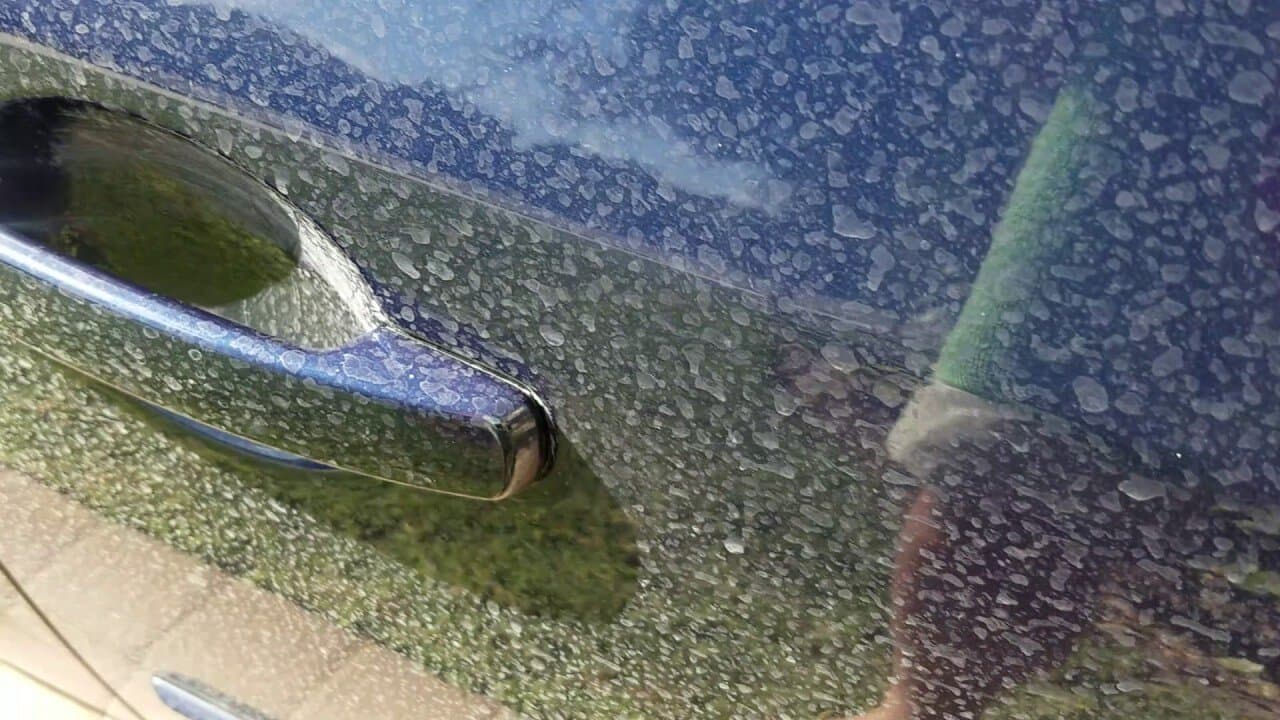
Hard water stains are mineral deposits left when water evaporates on your car. The main minerals are calcium and magnesium. They cling to the clear coat and look like white, cloudy rings or spots. Light spots sit on the surface. Stronger spots etch into the clear coat and need more work.
Why hard water stains form and how they damage paint
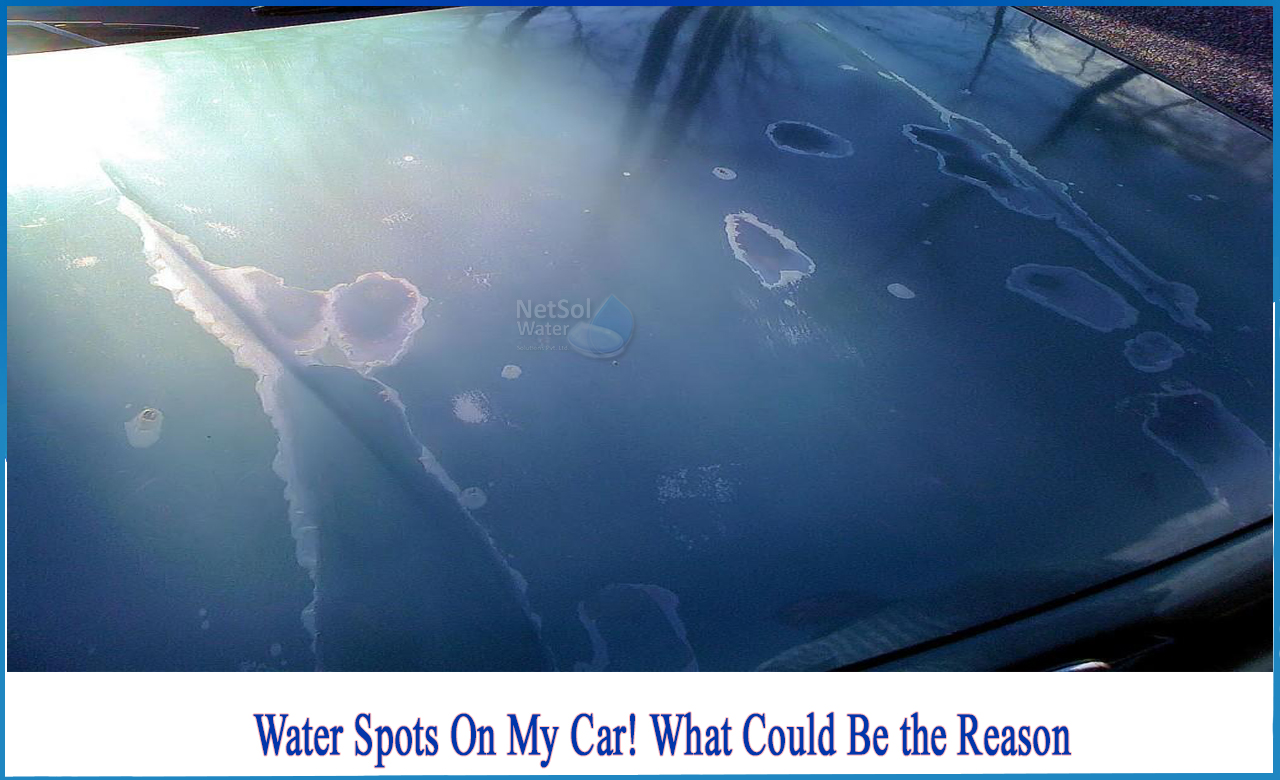
Hard water stains form when tap or sprinkler water dries on the surface. Minerals stay behind and bond to the paint or clear coat. Over time sun and heat bake those minerals, making the spots harder to remove. If left too long, the minerals etch into the clear coat and cause dull areas or permanent marks. That is why early action matters.
Quick answers people also ask
- What causes water spots to stay on paint?
- Minerals in hard water remain after evaporation and bond with the clear coat.
- Can sunlight make spots worse?
- Yes. Sun and heat bake minerals into the clear coat and speed etching.
How to remove hard water stains from car paint — step-by-step guide
Follow these safe steps. Test on a small area first. Work in shade and on cool panels.
- Wash the car
- Rinse with plenty of water to remove loose dirt.
- Use a pH-neutral car shampoo and a clean microfiber wash mitt.
- Dry with a soft microfiber towel to see the true condition.
- Inspect the spot
- Light residue wipes off with a damp cloth or is removed by washing.
- If a white ring persists, it may be a mineral deposit on the clear coat.
- If the spot looks dull or gummy, it may be etched.
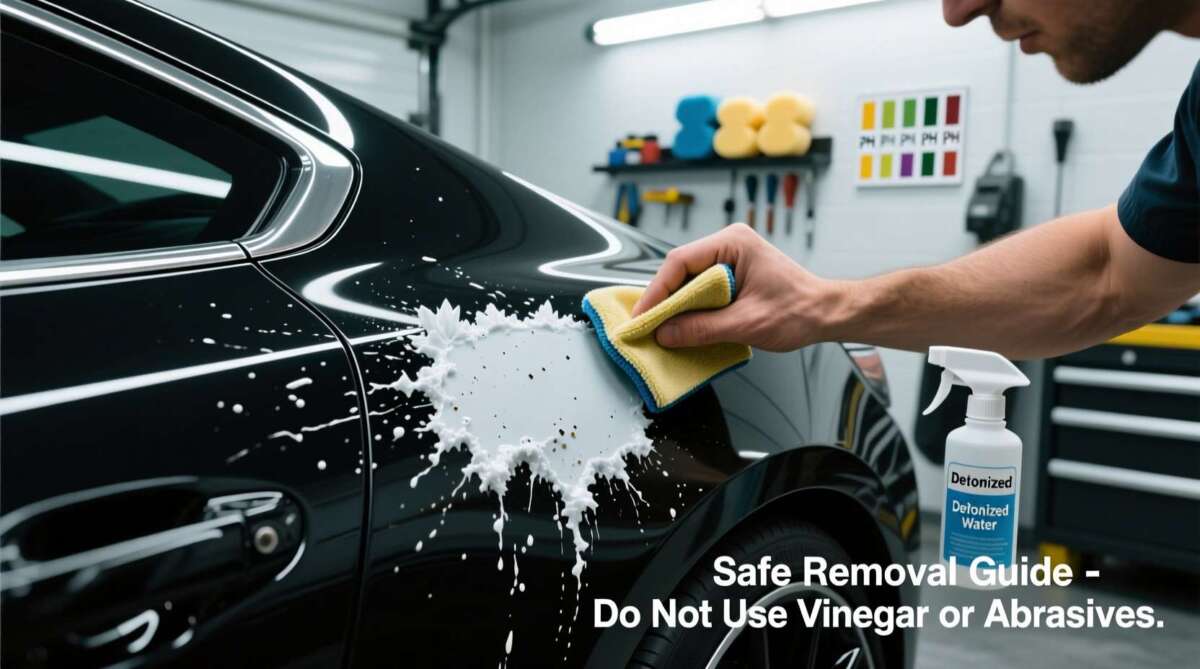
- Try a water spot remover or vinegar solution for light stains
- Use a commercial automotive water-spot remover per label instructions.
- Or mix 1:1 distilled white vinegar and distilled water and spray on the spot, let sit 30–60 seconds, then rinse well.
- Wipe gently with a microfiber towel.
- Use a clay bar for bonded contaminants
- Lubricate the panel with a clay lubricant or soapy water.
- Move the clay bar gently across the panel until the surface feels smooth.
- This removes mineral films without abrading the paint.
- Polish to remove light etching
- Use a mild polish and a soft pad by hand or a dual-action polisher.
- Work slowly in small sections and check results often.
- Polishing removes a tiny layer of clear coat to level the surface; use conservative pressure.
- Use a rubbing compound for deeper etching
- For heavier etch marks, use a fine rubbing compound, followed by a polish.
- Do this only if clay and polish don’t work. Limit the area to avoid excess clear coat removal.
- Follow with a paint sealant or wax.
- Protect the finish
- Apply a sealant, wax, or ceramic coating to make future spots easier to remove.
- Reapply protection every few months for wax and annually for many ceramic coatings.
- Final inspection and maintenance
- Rinse and dry the car after each wash.
- Check regularly for new water spots and remove them quickly.

DIY methods and home remedies — safe and risky options
Safe home options
- Distilled vinegar and distilled water (1:1) for light spots. Rinse immediately.
- Clay bar with proper lubrication removes bonded minerals safely.
- Microfiber towels and gentle polishing with a fine polish.
Risky or not recommended
- Abrasive household cleaners or scouring pads. They can scratch the clear coat.
- Acid cleaners not designed for cars. They can remove the clear coat or dull paint.
- DIY ceramic coatings from unknown sources. Some can cure poorly and cause staining.
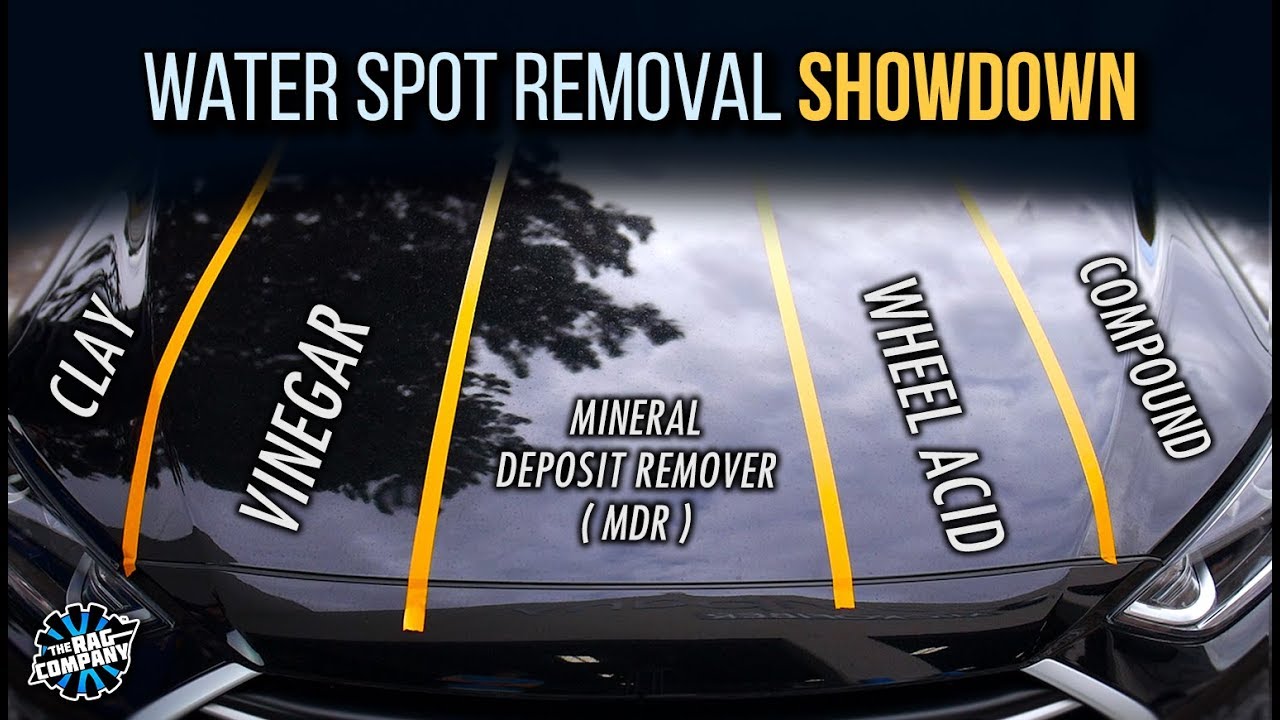
Best commercial products and tools
Choose car-care products made for paint and clear coat. Good tools save time and reduce risk.
- Water spot removers: Designed to dissolve mineral deposits safely.
- Clay bar kits: Remove bonded contaminants and include correct lubricant.
- Dual-action polisher: Safer than a rotary polisher for beginners.
- Polish and finishing polish: Polish first, then refine the shine.
- Rubbing compound: For heavier etching only and used sparingly.
- Quality microfiber towels: Soft, non-abrasive drying and buffing.
- Paint sealant or wax: Protects finish after correction.
Prevention and long-term protection
Preventing stains is easier than removing them. Keep simple habits for lasting results.
- Dry your car after rain or washing with a microfiber towel or a blower.
- Avoid automatic car washes that use hard water; use touchless washes or rinse with filtered water.
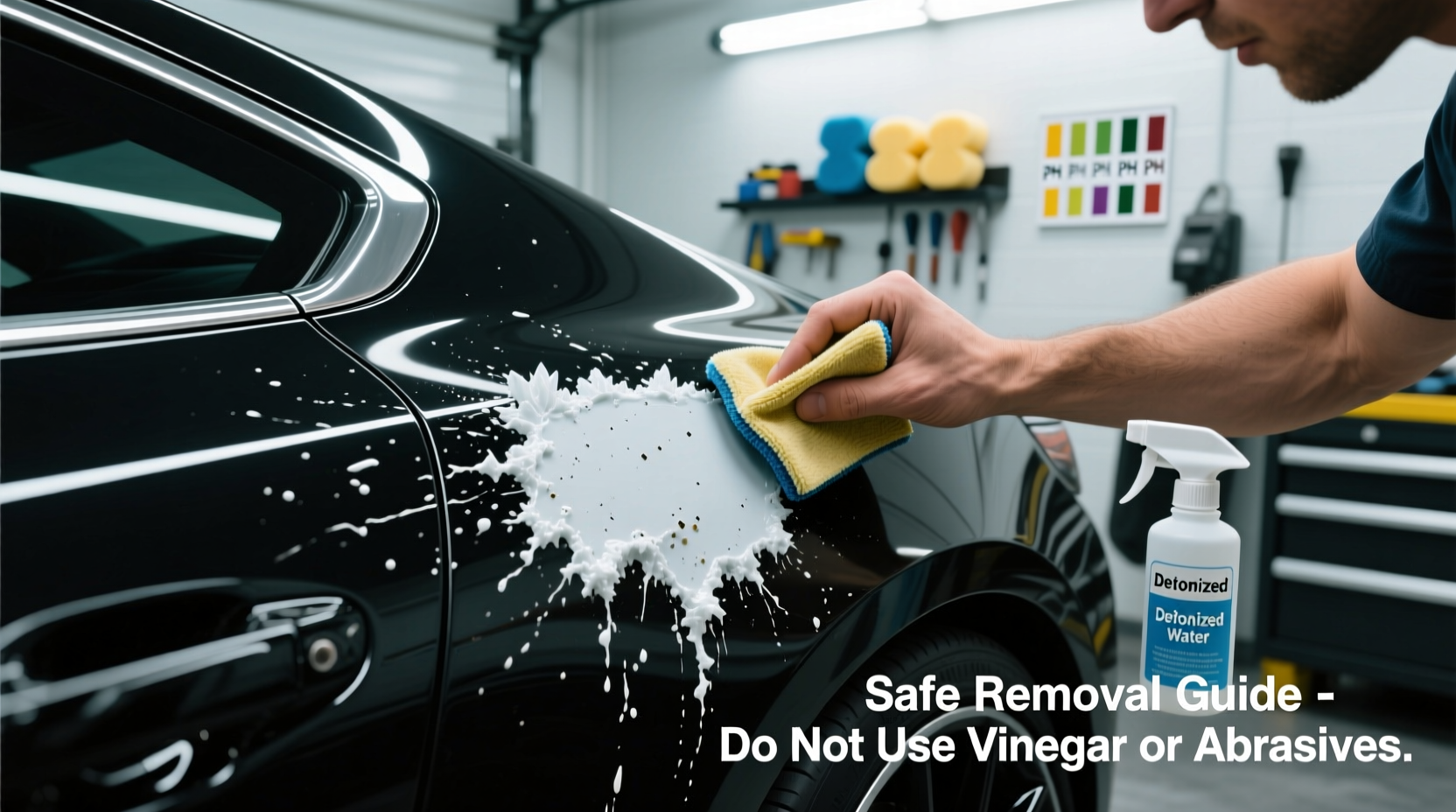
- Install a water softener or use deionized water for rinses if you wash at home.
- Apply a sealant, wax, or ceramic coating for long-term protection.
- Wipe up sprinkler and garden water splashes promptly.
Troubleshooting and when to see a pro
If stains won’t come out, get professional help. Deep etching often needs machine polishing or repainting.
Signs to consult a pro
- Stains remain after clay and polish.
- The surface feels rough and looks cloudy after correction attempts.
- You’re unsure how much clear coat to remove.
What a pro can do
- Use stronger machine polishing safely.
- Replace or repaint panels when clear coat is permanently damaged.
- Apply professional-grade ceramic coatings for long-term protection.
Personal insights and lessons learned
I once tried removing hard water stains from a client’s show car with strong acid. It left micro-marring and cost us time to correct. Since then I always test first and start with the least invasive option. My best results come from washing, clay bar, then light polish, followed by a high-quality sealant. Small, safe steps prevent big mistakes.
Key lessons
- Test in an unseen spot first.
- Start gentle and only step up strength if needed.
- Protect the finish after correction to avoid repeat work.
Frequently Asked Questions of How to remove hard water stains from car paint
How long does it take to remove hard water stains?
Most light stains can be removed in 15–45 minutes with washing, a clay bar, and a light polish. Heavily etched areas may take longer or require a professional.
Can vinegar permanently damage car paint?
Straight vinegar is acidic and can damage clear coat if left too long or used full strength. Use a 1:1 diluted solution and rinse immediately to minimize risk.
Will waxing hide hard water stains?
Wax can temporarily mask minor dulling but will not remove mineral etching. Correct the stains first, then wax to protect the surface.
Is clay bar safe on all paint types?
Yes, clay bar is safe for modern clear-coated paint when used with proper lubrication and light pressure. Avoid using dirty clay or dragging it across grit.
Does a ceramic coating stop hard water stains?
A ceramic coating greatly reduces the chance of hard water stains by making the surface hydrophobic and easier to clean. It won’t make stains impossible, but it makes them easier to remove.
Conclusion
Removing hard water stains from car paint is doable with careful steps: wash, clay, chemical or vinegar spot treatment for light spots, polish for etching, and proper protection afterward. Start gentle, test often, and protect your finish to prevent repeat damage. Take action now: inspect your car for spots, try the gentle methods here, and consider a protective coating to keep your paint looking its best. If you found this helpful, try the steps on one panel, share your results, or leave a comment with questions.