How To Clean Engine Bay Without Damaging Electronics: Guide
Clean the engine bay gently: shield electronics, use mild cleaners, and avoid high-pressure water.
I have cleaned hundreds of engine bays and helped car owners keep tight electronics safe. This guide on How to clean engine bay without damaging electronics walks you through smart prep, safe products, and step-by-step actions. Read on to learn practical tips I use in shops and at home so you can clean confidently and avoid costly mistakes.

Tools and materials you need for How to clean engine bay without damaging electronics
Use simple, safe tools. Gather everything before you start to limit wet time near sensors and modules.
- Soft-bristle brush for scrubbing small areas and grime
- Microfiber towels for drying and wiping
- Plastic bags and tape to cover exposed connectors and modules
- Low-pressure garden sprayer or spray bottle for cleaners
- Engine-safe degreaser that is biodegradable and low-alkaline
- Plastic or silicone protectant for hoses and trims
- Rubber gloves and safety glasses
From my experience, a small spray bottle beats a pressure washer for protecting electronics. Having the right materials makes How to clean engine bay without damaging electronics faster and safer.
Safety and preparation steps before you clean engine bay without damaging electronics
Prep protects both you and the car. Take time to cool the engine and disconnect power where needed.
- Let the engine cool for at least 30 minutes. Hot components can react badly with cleaners.
- Disconnect the negative battery terminal if you will be working near wiring or sensors. This reduces short risk.
- Cover air intakes, exposed fuse boxes, and open electrical connectors with plastic bags and tape.
- Remove the engine cover and any debris like leaves by hand first.
- Wear gloves and eye protection.
I once skipped battery disconnect on a quick clean and tripped a fault light. A 5-minute prep step avoided hours of diagnostics later. Proper prep is the heart of How to clean engine bay without damaging electronics.

Step-by-step process: How to clean engine bay without damaging electronics
Follow a slow, steady process. Work in small sections and keep water out of connectors.
- Dry-clean first
- Use compressed air or a soft brush to remove dust, dry grime, and loose debris.
- Clearing debris reduces the amount of cleaner needed and lowers water exposure.
- Mask sensitive components
- Cover the alternator, exposed ECU connectors, fuse boxes, and any open sensors with plastic bags and tape.
- Ensure covers are snug to keep cleaners and water out.
- Apply degreaser
- Spray an engine-safe degreaser on greasy areas only. Avoid soaking electrical parts.
- Let the degreaser sit for 3 to 5 minutes. Do not let it dry on the surface.
- Agitate gently
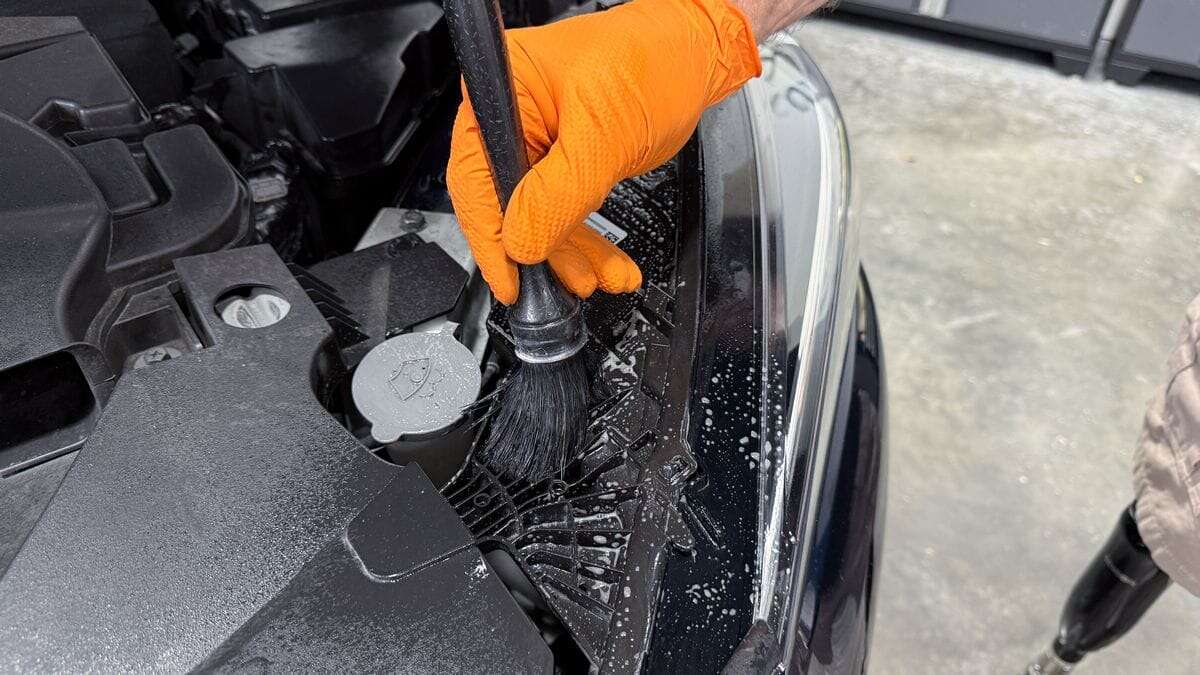
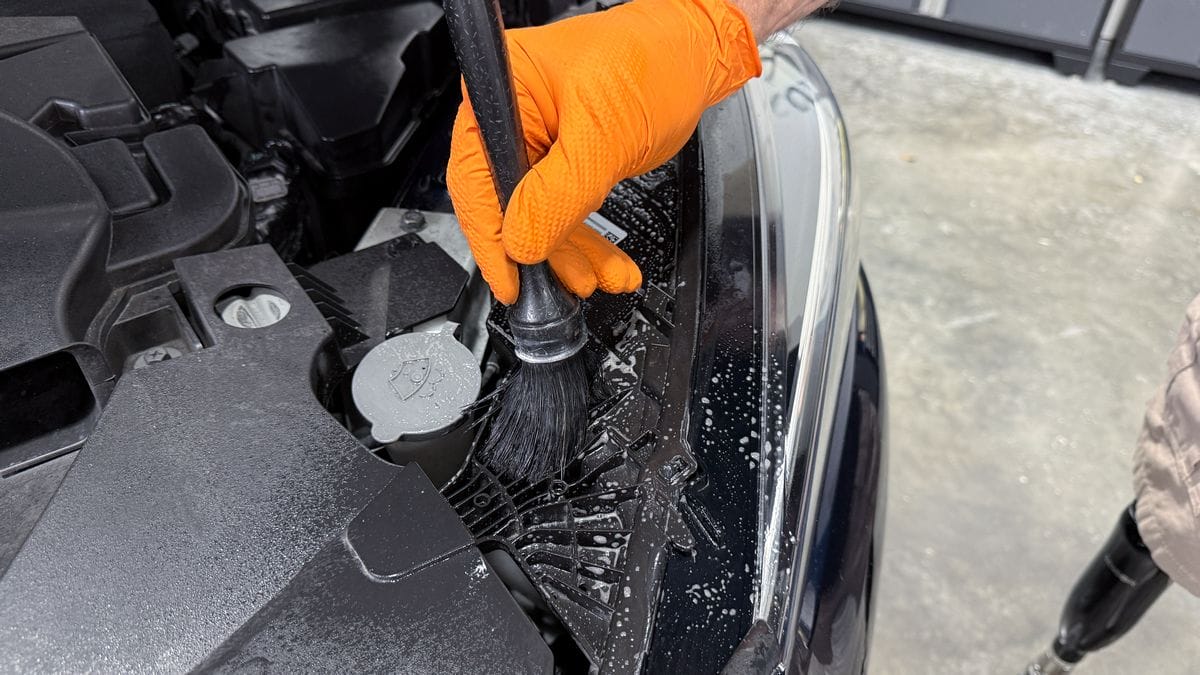
- Use a soft-bristle brush to loosen grime from metal, plastic, and hoses.
- Work in small zones. Rinse each zone after scrubbing before moving on.
- Low-pressure rinse or wipe
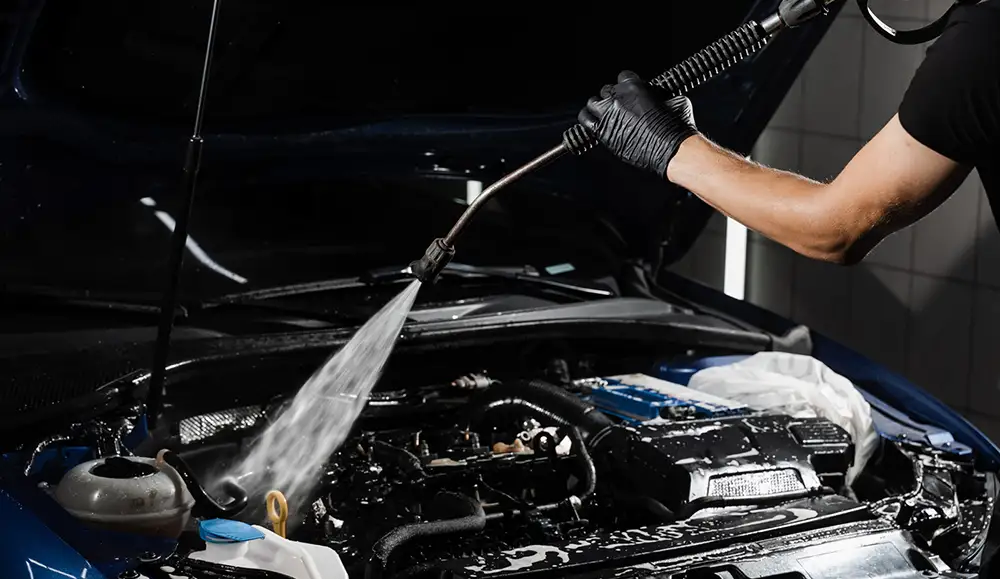
- Use a spray bottle with clean water or a low-pressure hose at wide-angle. Keep distance and low force.
- Alternatively, wipe with a damp microfiber towel to reduce water use.
- Dry thoroughly
- Use microfiber towels to blot and dry surfaces. Compressed air blows water from seams.
- Remove plastic covers once the area is dry and reconnect the battery if you had disconnected it.
- Finish with protectant
- Apply a silicone or rubber protectant to hoses and plastic trim for a clean look and UV protection.
Repeat these steps to make cleaning gentle and predictable. This method of How to clean engine bay without damaging electronics prioritizes drying and limited water exposure.
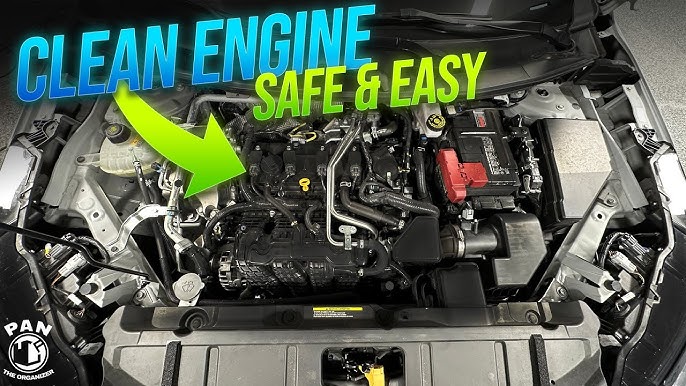
How to protect electrical components while you clean engine bay without damaging electronics
Electronics fail when wet or surprised. Use these practical safeguards.
- Cover everything electronic
- Use zip-top bags and tape to seal modules. Leave room for heat expansion.
- Use minimal water
- A spray bottle and towels reduce water near sensors. Avoid immersion.
- Avoid high-alkaline or solvent cleaners
- Acidic or strong solvent cleaners can eat insulation and connectors.
- Keep ignition off and keys away
- Prevent accidental cranking while working. That motion can draw water into sensitive parts.
- Dry connectors before reconnecting
- Use electrical contact cleaner and dry compressed air if needed.
In my shop, I never use a pressure washer near modern ECUs. Modern cars have many sensors exposed to the engine bay. These steps make How to clean engine bay without damaging electronics safe and repeatable.

Troubleshooting and common mistakes when you try to clean engine bay without damaging electronics
Know common errors so you avoid them. Small mistakes can cost time and money.
- Using a pressure washer too close
- High pressure forces water into connectors. If you see error lights after cleaning, this is often why.
- Skipping the battery disconnect
- Live circuits might short. Disconnecting the negative terminal is simple and effective.
- Letting cleaners dry on parts
- That leaves residue and can attract more dirt. Rinse or wipe soon after applying.
- Not masking sensors or air intakes
- Suction or liquids in the wrong place cause engine problems.
- Ignoring manufacturer guidance
- Some vehicles have specific spots to avoid. Check the owner manual for warnings.
One time I used an aggressive cleaner on a plastic manifold and caused surface dulling. I learned to test cleaners on a small area first. These fixes help you master How to clean engine bay without damaging electronics.

Maintenance tips to keep your engine bay clean longer and reduce need for heavy cleaning
Frequent light care beats deep scrubs. Keep things simple and regular.
- Wipe down every few weeks with a damp cloth.
- Use engine bay covers or shields where possible.
- Fix oil leaks quickly to prevent grease build-up.
- Park in a covered area to reduce dust and bird droppings.
- Schedule a gentle clean every 6 months, more often for off-road vehicles.
Regular care lowers the risk and effort required for How to clean engine bay without damaging electronics.
Frequently Asked Questions of How to clean engine bay without damaging electronics
Is it safe to use a pressure washer when cleaning the engine bay?
A pressure washer can force water into sensors and connectors. Use a low-pressure spray bottle or very gentle hose spray and keep distance from electronics.
Should I disconnect the battery before cleaning the engine bay?
Disconnecting the negative battery terminal reduces electrical short risk and is a good safety step when cleaning near wiring or modules.
What cleaner is best for cleaning the engine bay without harming electronics?
Choose a low-alkaline, engine-safe degreaser and biodegradable cleaners. Test on a small area first to ensure no damage to plastics or coatings.
Can I clean the engine bay while the car is hot?
No. Clean only after the engine has cooled. Hot parts can react with cleaners and cause burns or damage.
How do I dry electrical connectors after cleaning?
Use compressed air, microfiber towels, and gentle heat (ambient sun or safe heat gun at low distance) to dry connectors before removing protective covers or reconnecting the battery.
Conclusion
Cleaning your engine bay without harming electronics is a matter of prep, gentle products, and careful technique. Follow simple steps: cool the engine, mask electronics, use low-pressure cleaning, and dry thoroughly. Start with small, regular touch-ups to avoid heavy build-up and protect sensitive parts.
Take action this weekend: gather the right tools, test one small area, and try the step-by-step method here. Share your results or questions below and subscribe for more hands-on car care tips.