How To Clean Car Seats With Household Products: Quick Tips
Clean car seats using simple household items like vinegar, baking soda, dish soap, and warm water.
I’ve cleaned dozens of cars over the years, so I know what works and what ruins upholstery. This guide explains how to clean car seats with household products safely and effectively. You’ll get clear steps for cloth, leather, vinyl, and suede seats, easy homemade recipes, stain fixes, and real tips from hands-on experience. Read on to save money, avoid harsh chemicals, and make your seats look and smell fresh again.

Why clean car seats with household products?
Cleaning car seats with household products saves money and avoids harsh chemicals. Many home items are gentle, effective, and easy to find.
Household cleaners can remove everyday stains, odors, and dirt. They work well when used correctly and tested first. Using common products helps you react fast to spills. It also reduces trips to a professional cleaner. I learned that quick action and the right mix beat scrubbing with the wrong product every time.
Using household products is not always perfect. Some stains or materials need specialized cleaners. Always test and be cautious with colorfastness and leather finishes.
Safety first: what to check before you clean
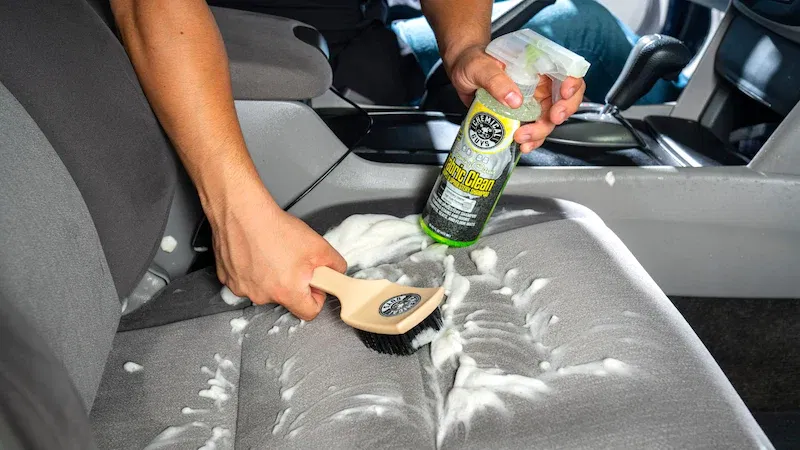
Know your seat material. Look in the owner’s manual or a tag under the seat for material and cleaning codes. Test cleaner on a hidden spot first.
Wear gloves for sensitive skin. Work in a ventilated space or with windows open. Avoid strong bleach on fabric or leather. Never saturate a seat; excess water can cause mold or warping. If you see dye transfer or color loss in the test patch, stop and use a specialist.
How to clean car seats with household products — step-by-step by seat type
Below are simple, safe methods you can try at home. Each method shows household products and short steps.
Cloth seats (fabric and woven upholstery)
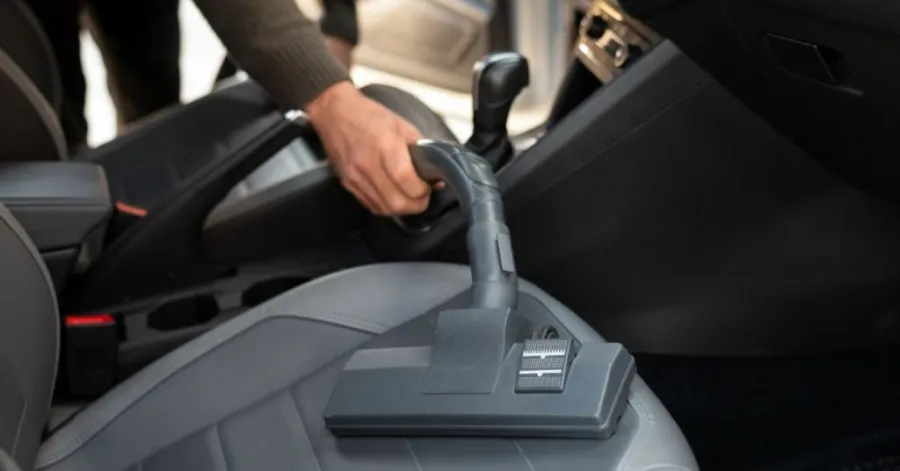
- Vacuum thoroughly to remove loose dirt and crumbs.
- Sprinkle baking soda over the seat and let sit 10–15 minutes to lift odors. Vacuum again.
- Mix 1 cup warm water, 1 teaspoon dish soap, and 1/4 cup white vinegar for an all-purpose cleaner.
- Lightly spray or dab the solution on stains with a microfiber cloth. Blot; do not rub.
- Rinse the cloth and repeat until the stain fades. Blot with a dry towel to remove moisture.
- Air dry with windows open or park in sun for faster drying.
I once removed a red wine stain using this vinegar mix and a hot day for drying. Quick blotting is the key.
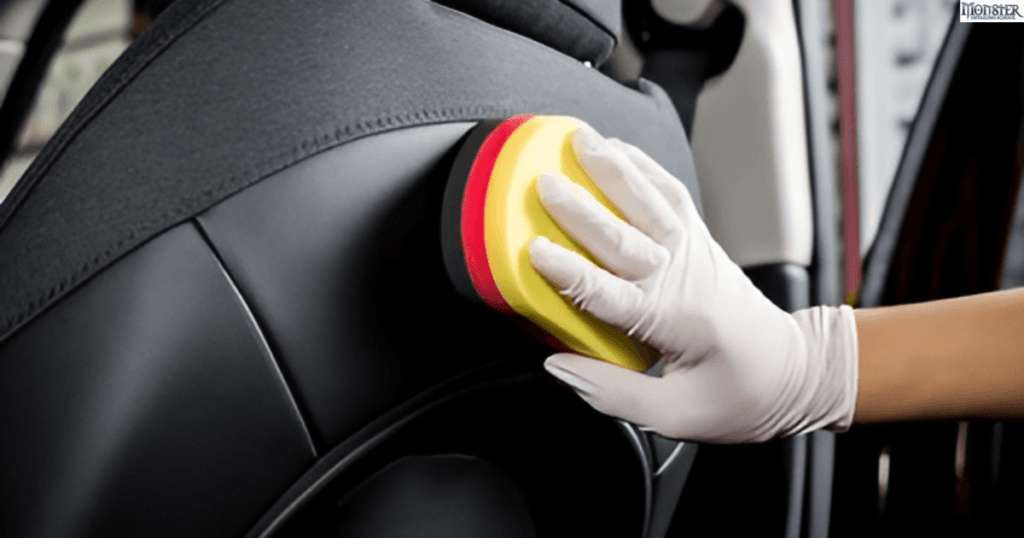
Leather seats
- Vacuum loose dirt with a soft brush attachment.
- Mix 1 cup warm water and 1 teaspoon mild dish soap. Dampen a cloth; wring out until just damp.
- Wipe small sections and dry immediately with another cloth.
- For deeper cleaning, use a 50/50 mix of distilled water and white vinegar applied lightly.
- Apply a leather conditioner after cleaning to restore oils and protect the surface.
Avoid harsh detergents or ammonia. Over-wetting leather can cause stiffness or cracks.
Vinyl seats
- Wipe with a microfiber cloth to remove dust.
- Mix warm water and a few drops of dish soap. Clean with a soft brush or cloth.
- For stubborn grime, use a paste of baking soda and water to scrub gently. Rinse and dry.
- Finish with a vinyl protectant or a light application of household glycerin to keep it supple.
Vinyl tolerates a bit more scrubbing than leather. But avoid abrasive tools that scratch.
Suede and Alcantara
- Use a dry suede brush or a clean toothbrush to lift dirt.
- For spots, use a small amount of rubbing alcohol on a microfiber cloth and blot.
- Use a suede eraser (or a clean pencil eraser) for scuffs. Brush to restore texture.
- Do not soak suede. If in doubt, seek a professional.
Suede is delicate. Household methods can help small spots, but deep stains often need specialist care.

Homemade cleaning solutions (recipes and ratios)
Here are easy, tested mixes you can make in minutes.
-
All-purpose cloth cleaner
- 1 cup warm water, 1 tsp dish soap, 1/4 cup white vinegar. Good for most fabric stains.
-
Odor and light stain lift
- 1/2 cup baking soda dissolved in 2 cups warm water. Spray lightly and blot.
-
Leather cleaner
- 1 cup warm water, 1 tsp mild dish soap. Use a damp cloth only.
-
Disinfecting spray (for quick surface cleaning)
- 1 part rubbing alcohol, 1 part distilled water. Use on vinyl and plastic; avoid on leather finishes.
-
Spot bleach substitute (for set-in protein stains like blood)
- 1 tablespoon hydrogen peroxide in 1/2 cup water. Test first on hidden area.
Always write down mixtures and label them. Use fresh mixes; don’t mix bleach with vinegar or alcohol. I keep a small spray bottle of the all-purpose mix in my garage for fast cleanups.
Stain-specific fixes
Quick, targeted actions deliver the best results. Act fast.
-
Coffee or soda
- Blot excess. Apply the all-purpose cleaner. Blot until stain fades. Repeat and dry.
-
Ink
- Dab rubbing alcohol on a cotton swab and blot gently. Follow with the all-purpose cleaner.
-
Grease and oil
- Sprinkle baking soda. Let sit 10 minutes. Brush off and apply dish soap solution. Blot and repeat.
-
Blood
- Use cold water to blot. Apply hydrogen peroxide mix sparingly and blot until the stain lifts.
-
Gum
- Freeze with an ice pack to harden. Break off gently and clean residue with dish soap.
-
Pet urine
- Blot, then use a mix of 1 cup water, 1/4 cup white vinegar, and 1 tsp dish soap. Rinse and dry well. Consider an enzyme cleaner if smell persists.
I once used baking soda and dish soap to remove motor oil from a cloth seat. It required two rounds, but the stain lifted without fading the fabric.
Drying, deodorizing, and maintenance
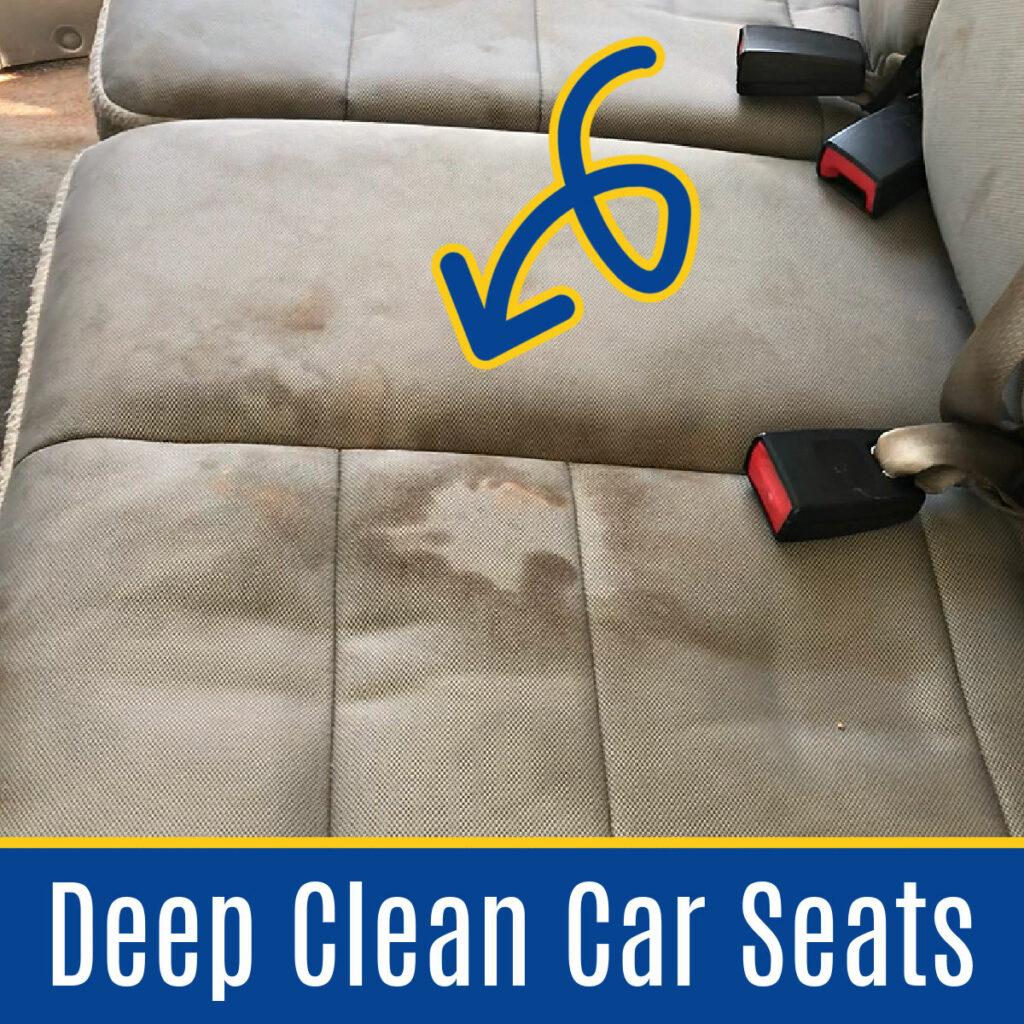
Drying well prevents mildew and odor. Vacuum and let air flow. Use fans or park with windows cracked in sun. Avoid direct heat on leather.
To deodorize: sprinkle baking soda overnight and vacuum. For persistent smells, use a small amount of vinegar solution, then air dry. Use seat covers for heavy use and pets. Regular vacuuming and quick spot cleaning prevent major problems.

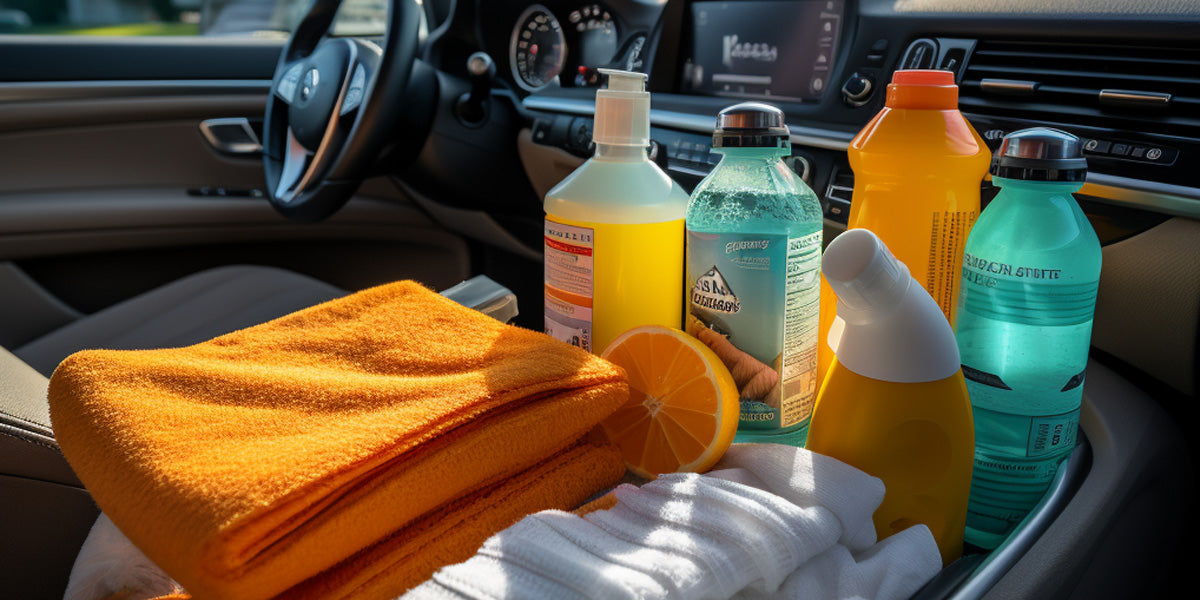
Tools and supplies checklist
Have these items ready before you start:
- Vacuum with crevice tool
- Microfiber cloths
- Soft-bristled brush or toothbrush
- Spray bottles for homemade cleaners
- Baking soda
- White vinegar
- Mild dish soap
- Rubbing alcohol and hydrogen peroxide (small amounts)
- Leather conditioner
- Suede brush and eraser
I keep a small kit in my trunk. It saves time and prevents stains from setting.

Troubleshooting common problems
Color loss or fading
- If color fades after cleaning, stop. Some dyes are unstable. A professional re-dye may be needed.
Water rings on leather
- Gently rub with a damp (not wet) cloth and dry. If they set, a leather conditioner can help even tones.
Lingering odor after cleaning
- Use baking soda and let sit overnight. If odor persists, an enzyme cleaner may be needed.
Stain won’t budge
- Consider a commercial upholstery or leather cleaner or professional service. Do not over-saturate or scrub aggressively.
People Also Ask (PAA-style questions)
Q: Can I use vinegar on all car seats?
A: Vinegar is safe for most cloth and vinyl seats when diluted. Avoid strong vinegar on delicate leather finishes unless tested first.
Q: Will baking soda remove all smells from car seats?
A: Baking soda neutralizes many odors and helps lift stains. For deep-set or biological odors, an enzyme cleaner may be required.
Q: How often should I clean car seats with household products?
A: Light cleaning every 1–3 months and spot cleaning as needed keeps seats fresh. Heavy use or spills may need more frequent attention.
Frequently Asked Questions of How to clean car seats with household products
What household product is best for fabric car seats?
A gentle mix of warm water, dish soap, and white vinegar works well for most fabric seats. Test a hidden spot first and blot stains rather than rubbing.
Can I use rubbing alcohol on my car seats?
Yes, rubbing alcohol can work on ink or small spots on fabric and vinyl. Avoid heavy use on leather and always test first.
Is baking soda safe for leather seats?
Baking soda can absorb odors, but avoid leaving it on leather too long. Vacuum off after 10–15 minutes and condition the leather afterward.
How do I dry car seats quickly after cleaning?
Open windows, park in the sun, and use a fan to speed drying. For leather, avoid direct heat to prevent cracks.
When should I seek professional cleaning instead of DIY?
Seek pros for deep-set stains, dye transfer, large spills, or if test patches show color loss. Professionals can re-dye leather and deep-clean fabrics safely.
Conclusion
Cleaning car seats with household products is practical and cost-effective when you know your seat type and test first. Use simple mixes like dish soap and vinegar for cloth, mild soap for leather, and baking soda for odors. Act quickly on spills, dry seats well, and keep a basic cleaning kit in your car or garage. Try the methods here this weekend and see how much fresher your car feels. If you found this useful, leave a comment, share your results, or subscribe for more practical car care tips.