How Many Inches of Water Can Move a Car: Safety Insights
It is raining hard. You are driving home. The wipers are moving fast. You can barely see. Suddenly, you see a large puddle ahead.
It covers the whole road. It looks calm. You think, “I can make it.”
Stop right there.
That thought is dangerous. It is a common mistake. I have made it too.
You are asking a vital question. How many inches of water can move a car?
The answer might shock you. It is much less than you think.
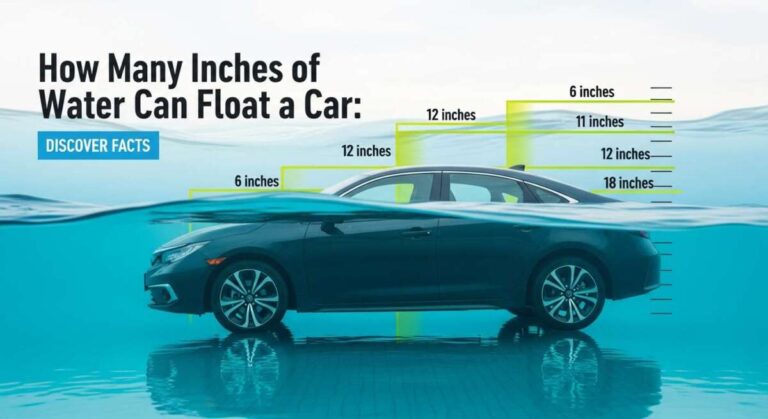
Just 12 inches of water can float a small car. That is only one foot. It is the size of a ruler.
If the water is moving, it is even worse.
In this guide, I will talk to you like a friend. I will share the facts. I will explain the science simply. I will also tell you a scary story from my own life.
We will keep you safe. We will keep your car dry. Let’s dive in.
The Power of Water: A Quick Summary
Water looks soft. But it is heavy. It is strong.
Here are the three numbers you must memorize.
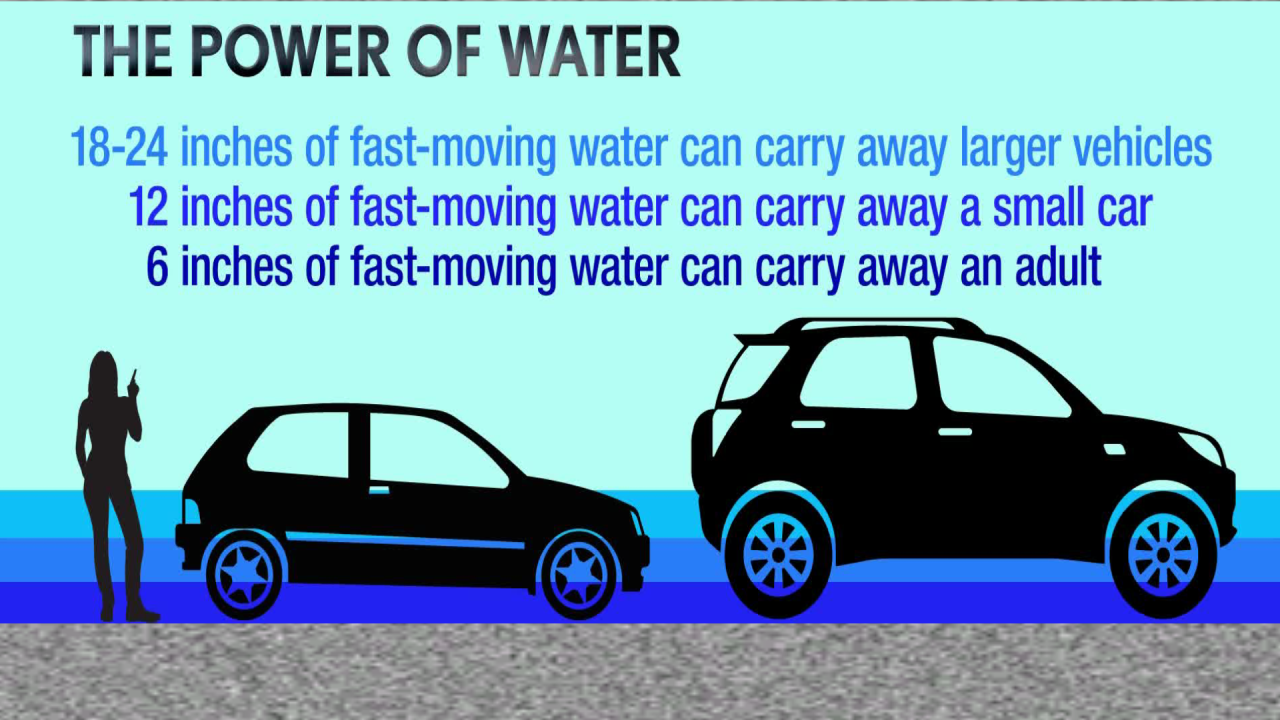
- 6 Inches: You lose control. The engine can stall.
- 12 Inches: A small car will float. It will drift away.
- 2 Feet: Most trucks and SUVs will be swept away.
Do not forget these numbers. They are the difference between a safe trip and a disaster.
The “6-Inch Rule”: Losing Control
Imagine a cereal bowl. Now, put a little milk in it. The cereal floats, right?
Your car is like that cereal.
Six inches of water is not much. It reaches the bottom of most passenger cars. It hits the door frame.
What Happens at 6 Inches?
First, the water hits the bottom of the car. It splashes up.
It enters the exhaust pipe. If you let off the gas, the engine sucks water in. The engine dies. Now you are stuck.
Second, you lose grip. This is called driving through flood water risks. The tires cannot touch the road well. You might feel the steering wheel get loose. You cannot steer. You cannot brake.
This is the start of trouble.
Credit: www.3newsnow.com
The “12-Inch Danger”: When Cars Become Boats
This is where it gets scary.
You might think, “My car weighs 3,000 pounds. Water cannot lift it.”
You are wrong.
The Science of Floating
Think about a ship. Ships are heavy. They are made of steel. But they float. Why?
Because they are hollow. They are full of air.
Your car is also hollow. It is a metal box full of air. The tires are full of air too.
When the water gets 12 inches deep, it pushes up. This is called buoyancy. The water pushes up harder than the car pushes down.
Suddenly, your tires leave the ground. You are no longer driving. You are boating. But you have no rudder. You have no propeller. You are helpless.
If the water is moving, even slowly, you will drift. You will hit trees. You will hit other cars.
My Personal Experience: The “Shortcut” Mistake
I want to share a story with you. I am not just a writer. I am a driver like you.
Years ago, I had a big pickup truck. I thought I was invincible.
It was a stormy night. The creek near my house overflowed. The road was covered in brown water. It didn’t look deep. I thought, “I have a truck. I can cross this.”
I drove in.
At first, it was fine. Then, the water got deeper. Suddenly, my steering wheel felt weird. It felt light. It felt like I was driving on ice.
My rear wheels started to slide sideways. The current was pushing me. I wasn’t driving anymore. The river was driving me.
Panic set in. My heart pounded.
Luckily, my front tires caught some gravel. I slammed on the gas. The truck jerked forward. I climbed out of the water.
I was shaking. I stopped the truck. I looked back. The water was higher than I thought.
I got lucky. Very lucky. I learned a lesson that day. Never trust the water. No matter how big your truck is.
The “2-Foot Death Zone”: Trucks and SUVs
This brings us to the next point.
Many people drive SUVs. They drive big trucks. They think, “I am high up. I am safe.”
This is a myth.
Two feet of water will carry away almost anything.
This includes:
- Pickups.
- Large SUVs.
- Vans.
Why Size Doesn’t Matter
A bigger vehicle has bigger tires. Bigger tires hold more air. This means more buoyancy.
Also, a bigger vehicle has a bigger side. This gives the current more to push against.
If the water is moving, two feet of water has thousands of pounds of force. It will push your truck off the road. It will flip it over.
Do not be overconfident. Flash flood driving safety applies to everyone.

Credit: x.com
The Hidden Dangers Under the Surface
The water itself is strong. But what is under the water?
You cannot see the road. This is a huge problem.
The Washed-Out Road
Floods eat roads. The asphalt might look fine on top. But the dirt underneath might be gone.
If you drive on it, the road collapses. Your car falls into a hole.
The Missing Manhole
Water pressure pops manhole covers. If you drive into an open manhole, your wheel gets stuck. You are trapped. The water rises. This is a deadly trap.
Debris
Logs, rocks, and trash float in the water. They can smash your windshield. They can puncture your tires.
How to Estimate Water Depth
You are stopped at the water’s edge. You are wondering, “How deep is it?”
Rule #1: If you don’t know, don’t go.
But if you must look, use clues.
- Look at signs: Is the water halfway up a stop sign pole? That is too deep.
- Look at fences: Is the water covering the bottom of a fence?
- Look at other cars: Is there a parked car? Is the water over its wheels?
Never walk into the water to check. You could fall. You could be swept away.
Physics 101: Why Water is Stronger Than Steel
Let’s do some simple math.
Water is heavy. One cubic foot of water weighs 62.4 pounds.
Imagine a wall of water hitting the side of your car.
If the water is moving at 4 miles per hour, it exerts huge force. It is like a tackle from a football player. But this player never gets tired.
The depth of water to stall car engines is low. The force to move it is high.
Friction holds your car on the road. Water removes friction. Current adds force.
It is a losing battle. Gravity loses. Water wins.
Survival Guide: What If You Get Stuck?
Sometimes, accidents happen. Maybe the flash flood came too fast.
You are in the water. Your car is floating. What do you do?
Follow these steps. Memorize them.
1. Stay Calm
Panic kills. Take a deep breath. You need to think.
2. Windows Down (Immediately)
Do this first. Electric windows might short out later. Open them now. This is your exit.
3. Seatbelt Off
You cannot swim with a seatbelt on. Unbuckle it. Unbuckle the kids.
4. Climb Out
Do not open the door. The water pressure will hold it shut. Climb out the window.
5. Get to the Roof
Sit on the roof. Call 911. Stay there. It is the safest place.
Entity Analysis: You should carry a “glass breaker” tool. It is a small hammer. If the windows won’t open, use it. Break the side window.
Prevention: The Smartest Move
The best way to survive a flood is to avoid it.
Check the Weather
Before you leave, look at the radar. Is there a flood watch? Is there a warning?
Plan Your Route
Avoid low spots. Avoid underpasses. These fill up fast.
Turn Around, Don’t Drown
This is the slogan of the National Weather Service. It is simple. It rhymes. It saves lives.
If you see water, turn around. It will only take five minutes to find another way. It could take your life to cross.
Conclusion
So, let’s look at the answer again.
How many inches of water can move a car?
- 6 Inches: You lose control.
- 12 Inches: You float away.
Water is not your friend on the road. It is a powerful force. It does not care what car you drive.
I hope you never face this. But if you do, remember my truck story. Remember how fast it happens.
Be smart. Be safe. Respect the water.
Next time it rains, slow down. Watch the road. And please, turn around.
Your family needs you home safe.
Frequently Asked Questions (FAQ)
Can I drive through a puddle slowly?
You should avoid it. If you must, go very slowly. Going fast sprays water into the engine. This causes it to stall. If you cannot see the bottom, do not drive through it.
Does a truck float better than a car?
Yes and no. A truck is taller. But it still floats in two feet of water. Once it floats, it is harder to control. It is just a bigger boat.
What is hydrostatic lock?
This happens when water goes into the engine cylinders. Water cannot be compressed like air. The pistons hit the water and stop. This breaks the engine instantly. It ruins the car.
How fast does water move in a flood?
Flood water can move very fast. Even 6 miles per hour is fast. It is faster than you can walk. The force increases with speed. Never underestimate the speed of the current.
Why do tires help a car float?
Tires are full of air. They act like life jackets for your car. They add buoyancy. This lifts the car up. It breaks the grip on the road.
What if a power line falls in the water?
Stay in the car. If you step out, you could be electrocuted. Do not touch the metal parts of the car. Wait for help. Call 911 and tell them about the wire.