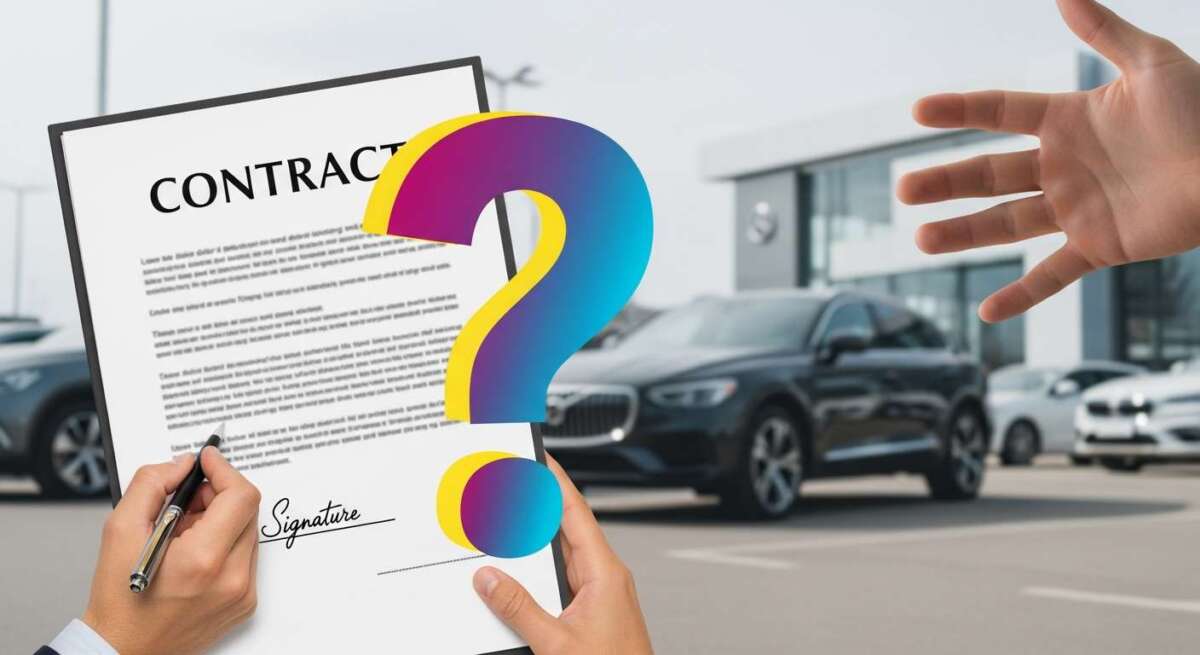
Can Dealership Take Car Back After You Signed Contract?
Let me start by saying this clearly, because I know you’re worried.
Yes, a dealership can sometimes take a car back after you signed a contract—but only in very specific situations.
Now take a deep breath.
Because most of the time, they cannot legally do it, even if they act confident or pushy.
I’ve been writing about consumer rights and car buying for years. And honestly, this is one of the most stressful calls people get after buying a car.
I still remember the first time someone told me this story.
“They called me three days later and said I had to bring the car back.”
If that sentence made your stomach drop, you’re in the right place.
Let’s slow this down and walk through everything together, step by step, in plain English.
Why This Question Scares So Many Car Buyers (And You’re Not Alone)
Buying a car feels like a big win.
You negotiate.
You sign papers.
You drive home smiling.
Then suddenly, your phone rings.
“Hey, this is the dealership. There’s a problem with your contract.”
That moment turns excitement into panic.
And I get it—because I’ve been there.
Years ago, I helped a close friend buy a used SUV. Two days later, the dealer called saying the financing “didn’t go through.” They asked him to return the car or accept higher payments.
He felt trapped.
He felt confused.
And most of all, he felt powerless.
Here’s the truth most dealers won’t explain clearly:
Your rights depend on what you signed, how the deal was structured, and what your state law says.
Once you understand that, the fear fades.
Short Answer First: Can a Dealership Take Your Car Back After You Sign?
Let’s keep this simple.
👉 In most cases, NO—a dealership cannot take your car back after you signed a contract.
However, there are exceptions, and this is where people get caught off guard.
A dealership may try to take the car back if:
- Financing was not fully approved
- The contract says the sale is conditional
- There was fraud or false information
- The dealer legally cannot transfer the title
That’s it.
If none of those apply, the dealer usually has no legal right to cancel the deal.
And yes—dealers sometimes try anyway.

Credit: www.npr.org
What a Signed Car Contract Really Means (In Plain English)
A signed car contract is not just paperwork.
It’s a legal agreement.
Once both sides sign, the deal is usually final.
Here’s what makes a car contract legally binding:
- Offer – The dealer offers the car at a price
- Acceptance – You agree and sign
- Consideration – Money, financing, or trade-in is exchanged
When all three exist, the contract is valid.
That means:
- The dealer must sell the car
- You must pay as agreed
Unless the contract clearly says otherwise.
This is where many buyers get tripped up.
My Personal Experience With a “We Need the Car Back” Call
Let me share a real experience from my early years writing about auto finance.
I once reviewed a contract for a reader who contacted me in a panic.
The dealership told her:
“Your loan wasn’t approved. Bring the car back today.”
She sent me the contract.
Right there, buried in small print, was a clause called “conditional delivery.”
This meant the deal depended on final lender approval.
The dealer wasn’t lying—but they also weren’t explaining her options.
She didn’t have to accept worse terms.
She didn’t owe extra fees.
And she had the right to walk away.
That moment taught me something important:
Most problems come from contracts buyers don’t fully understand.
And dealers know this.
Common Reasons a Dealership May Try to Take the Car Back
Let’s break these down clearly and calmly.
Financing Fell Through (Spot Delivery Explained)
This is the most common reason.
Dealers sometimes let you take the car home before financing is final. This is called spot delivery.
If the lender later says no, the dealer may call you back.
This doesn’t always mean you lose the car—but it does mean the deal changes.
We’ll dive deeper into spot delivery later.
Errors or Missing Information in the Contract
Sometimes contracts have mistakes:
- Wrong interest rate
- Incorrect price
- Missing signatures
Minor errors usually don’t cancel a deal.
Major ones might.
Fraud or Misrepresentation
If someone lies on the application—about income, job, or identity—the contract can be void.
This cuts both ways.
If the dealer misrepresented the car, you may also have rights to cancel.
Title or Ownership Problems
A dealer cannot legally sell a car without clear title.
If a lien exists or ownership is unclear, they may have to unwind the deal.
Dealer Mistakes You Did Not Cause
Here’s an important point:
Dealer mistakes do NOT automatically become your problem.
If the error is on their side, the law often protects you.

Credit: www.opb.org
What Is Spot Delivery and Why It Causes Most “Car Taken Back” Problems
Let me slow this down, because spot delivery is where most people get burned.
Spot delivery means the dealership lets you take the car home before financing is fully approved.
Sounds nice, right?
But here’s the catch.
The deal is not final yet, even if:
- You signed papers
- You drove the car home
- You got plates or temporary tags
I’ve seen this confuse hundreds of buyers over the years.
Why Dealerships Use Spot Delivery
Dealers use spot delivery because:
- It closes the sale faster
- Buyers feel committed once they leave
- Financing can be sorted out later
From the dealer’s view, it’s efficient.
From the buyer’s view, it’s risky—if you don’t understand it.
How Spot Delivery Usually Unfolds (Realistic Scenario)
Here’s how it often goes.
- You sign the contract late in the day
- The finance office says, “You’re approved”
- You take the car home
- Two or three days later, the dealer calls
They say:
“The lender didn’t approve the loan. We need you back.”
At this point, buyers panic.
But panic is the worst move.
Your Rights During a Spot Delivery Situation
Here’s what many people don’t know.
If financing falls through:
- You do not have to accept worse terms
- You do not owe extra fees
- You may have the right to unwind the deal
In many states, the dealer must:
- Return your trade-in
- Refund your down payment
- Cancel the contract fully
This is not a favor.
It’s the law.
Why State Laws Matter More Than Dealer Policy
One thing I always tell readers is this:
Dealer policy does NOT override state law.
Ever.
Your rights depend heavily on:
- Where you live
- State consumer protection laws
- State vehicle sales regulations
That’s why advice online can feel confusing.
What’s legal in one state may not be legal in another.
Cooling-Off Period Myths (Let’s Clear This Up)
I hear this all the time:
“I thought I had three days to cancel.”
For car purchases?
Usually false.
Most states do not offer a cooling-off period for car sales made at a dealership.
Cooling-off rules often apply to:
- Door-to-door sales
- Online sales
- High-pressure home contracts
Not cars bought on a lot.
That said, spot delivery laws sometimes act like a cooling-off window—but only in specific cases.
Lemon Laws and Why They Matter Later
Lemon laws don’t usually apply right away.
But they matter if:
- The car has repeated defects
- Repairs fail
- The issue appears early
If a dealer tries to take a car back because it’s defective, that raises red flags.
Lemon laws exist to protect you, not the dealer.
What Your Rights Are After You Sign a Car Contract
Let’s make this very clear.
Once a contract is final, you have strong rights.
Your Core Rights as a Buyer
You have the right to:
- Keep the car if financing is approved
- Enforce the agreed price
- Reject new or worse loan terms
- Receive full refunds if the deal is canceled
And importantly:
You are not required to renegotiate.
What to Do Immediately If a Dealer Asks for the Car Back
This is where calm action matters.
Here’s exactly what I recommend.
Step 1: Do Not Agree on the Phone
Phone calls create pressure.
Instead, say:
“Please send all details in writing.”
This protects you.
Step 2: Review the Contract Carefully
Look for:
- “Conditional delivery”
- “Subject to financing”
- “Spot delivery agreement”
If you’re unsure, that’s normal.
Most contracts are confusing on purpose.
Step 3: Ask One Simple Question
Ask the dealer:
“Is the contract canceled, or are you changing the terms?”
This forces clarity.
Step 4: Document Everything
Save:
- Emails
- Texts
- Voicemails
- Copies of contracts
Paper trails protect buyers.
Step 5: Contact Consumer Protection Help
You can contact:
- Your State Attorney General
- The Federal Trade Commission
These agencies exist for this exact reason.
When You Should Say “No” to the Dealership
There are moments when you should firmly refuse.
Say no if:
- They demand higher payments
- They threaten legal action without proof
- They refuse to return your down payment
- They pressure you to sign new papers
Pressure does not equal legality.
When You Should Get a Lawyer (And When You May Not Need One)
You may not need a lawyer if:
- The dealer cooperates
- The deal is cleanly canceled
- Money and trade-ins are returned
You should get legal help if:
- The dealer refuses refunds
- They keep your trade-in
- They threaten repossession
Many states offer free legal aid for consumers.
How to Prevent This Problem Before You Buy a Car
Prevention is easier than fixing a mess later.
Here’s my simple buyer checklist.
Before You Sign Anything
✔ Confirm financing is final
✔ Ask if the deal is conditional
✔ Read the delivery section
✔ Take photos of all paperwork
Before You Drive Away
✔ Confirm lender approval
✔ Ask for copies immediately
✔ Don’t rush—ever
I follow this checklist myself now.
And it has saved me more than once.
Trusted Consumer Advocacy Resources That Can Actually Help You
When things go wrong, you should never feel alone.
Over the years, I’ve learned that the smartest buyers don’t just argue with dealerships. Instead, they bring in outside authority. That changes everything.
Here are resources I trust and often recommend.
Federal-Level Consumer Protection
You can file complaints and get guidance from the
Federal Trade Commission.
They:
- Track unfair dealership practices
- Educate buyers about auto fraud
- Pressure businesses to follow the law
While they won’t represent you personally, their involvement often motivates dealers to cooperate.
State Attorney General Offices
Every state has a consumer protection division.
These offices:
- Handle car dealer complaints
- Enforce state vehicle sales laws
- Mediate disputes between buyers and sellers
In my experience, dealerships respond much faster once an Attorney General complaint is filed.
Free or Low-Cost Legal Aid
Many buyers don’t realize this, but legal help doesn’t always cost money.
Look for:
- Legal aid societies
- State bar referral programs
- Consumer law clinics
I once watched a simple legal letter resolve a car dispute in under 48 hours.
Understanding Legal Remedies If a Dealer Breaks the Contract
If a dealership truly violates the law, you may have options.
Let me explain these simply.
Contract Enforcement
You can ask a court to:
- Enforce the original contract
- Stop the dealer from canceling the deal
This is common when financing was approved.
Contract Rescission
If the deal is undone, the law usually requires:
- Full refund of your down payment
- Return of your trade-in
- Cancellation of loan paperwork
You should not lose money due to dealer errors.
Monetary Damages
In rare cases, buyers may recover:
- Fees
- Rental costs
- Financial losses caused by the dealer
This usually requires legal help, but it exists for a reason.
Frequently Asked Questions (Clear Answers, No Legal Jargon)
Below are the most common questions readers ask me. Each answer is written for real people, not lawyers.
Can a dealership take a car back after you signed the contract?
In most cases, no. Once a contract is signed and financing is approved, the dealership cannot legally take the car back. Exceptions usually involve conditional financing, fraud, or title issues clearly stated in the contract.
Can a car dealership cancel a signed contract?
A dealership generally cannot cancel a signed car contract without a valid legal reason. If financing is final and the paperwork is complete, both parties must honor the agreement under contract law.
What happens if my car financing falls through after signing?
If financing falls through under a conditional or spot delivery agreement, the dealer may unwind the deal. However, you are not required to accept worse terms and are usually entitled to refunds and your trade-in.
Do I have a cooling-off period after buying a car?
Most states do not offer a cooling-off period for dealership car purchases. This is a common myth. Some protections exist for spot delivery situations, but they depend on state law and contract terms.
Can a dealership force me to sign a new contract?
No dealership can legally force you to sign a new contract. You always have the right to refuse new terms, especially if the original agreement was valid and financing was approved.
Should I return the car immediately if the dealer calls?
Not automatically. You should first review your contract, request written explanations, and understand your rights. Returning the car without clarity may weaken your position unnecessarily.
When should I contact a lawyer about a car contract dispute?
You should contact a lawyer if the dealership refuses refunds, keeps your trade-in, threatens repossession, or pressures you aggressively. Early legal advice often prevents bigger problems later.
Can a dealership repossess the car after signing?
Repossession usually requires missed payments or legal grounds. A dealership cannot simply repossess a car because financing changed unless the contract legally allows it and proper procedures are followed.
Final Thoughts: How to Buy a Car With Confidence Next Time
Let me leave you with this.
Car buying should feel exciting—not scary.
And yet, confusion around contracts, financing, and dealer tactics causes stress for millions of buyers every year.
The good news?
Knowledge changes the balance of power.
Once you understand:
- What your contract really says
- When a dealer can cancel a deal
- When they absolutely cannot
You stop feeling trapped.
You start feeling confident.
I’ve seen buyers stand their ground calmly—and win—simply because they understood their rights.
If you take nothing else from this guide, remember this:
A signed contract means something.
And you deserve clarity, fairness, and respect.
Ask questions.
Read carefully.
And never rush a decision that affects your money and peace of mind.
You’ve got this. 🚗✨