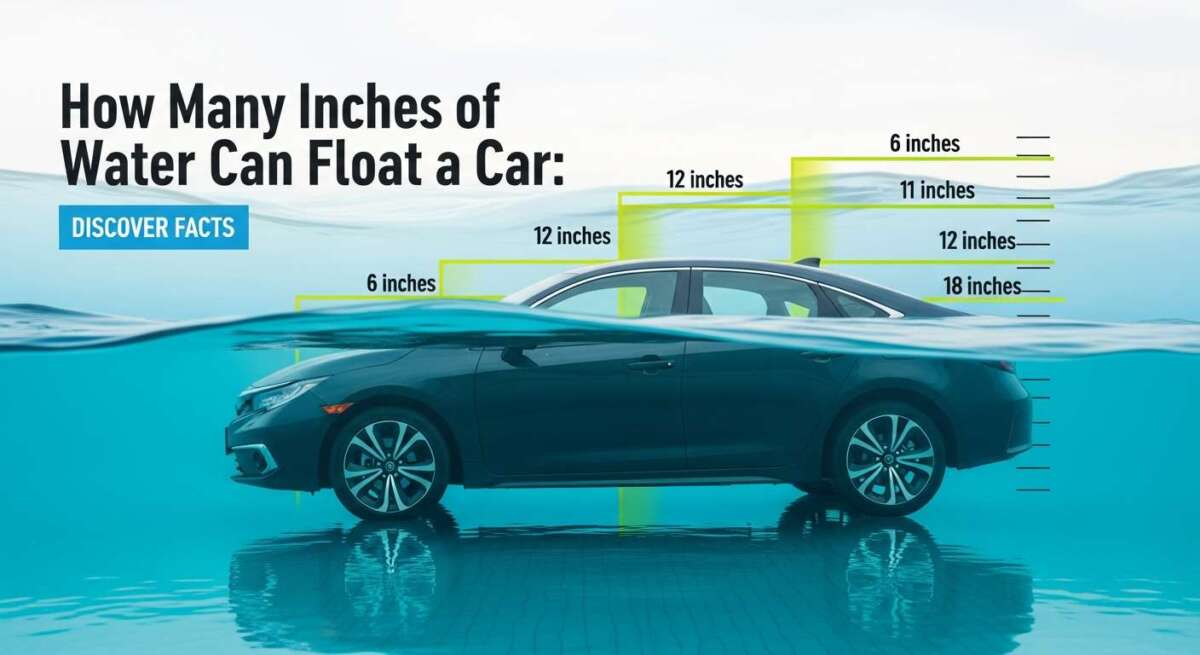
How Many Inches of Water Can Float a Car: Discover Facts
Have you ever looked at a puddle and thought, “I can make it”? I know I have. We all have places to be. We have jobs, kids, and deadlines. But that thought can be a deadly mistake.
Today, I want to talk to you about something scary but important. We need to know how many inches of water can float a car. It is much less than you think.
I am going to share some facts with you. I will also share a personal story from my own life. I want you to be safe. I want you to feel ready for anything.
So, let’s dive in. Let’s learn why water is stronger than steel.
The Night I Learned the Hard Way
I want to start with a story. It was a dark, rainy Tuesday in 2018. I was driving home on a road I knew well. I had driven this road a thousand times.
It was raining hard. The radio said there were flash floods. But I thought, “My car is heavy. I am a good driver. I will be fine.”
I came to a low spot in the road. There was water across it. It did not look deep. It looked calm. So, I eased my car into the water.
Suddenly, my steering wheel felt light. It felt like I was driving on ice. My heavy sedan shifted to the right. The engine did not stop, but I had no control. My heart started to race. I was lucky that night. My tires found grip at the last second. I backed out.
My hands shook for an hour.
That night, I learned a lesson. Driving through flooded roads safety is not about skill. It is about physics. Even a few inches of water can take control away from you.
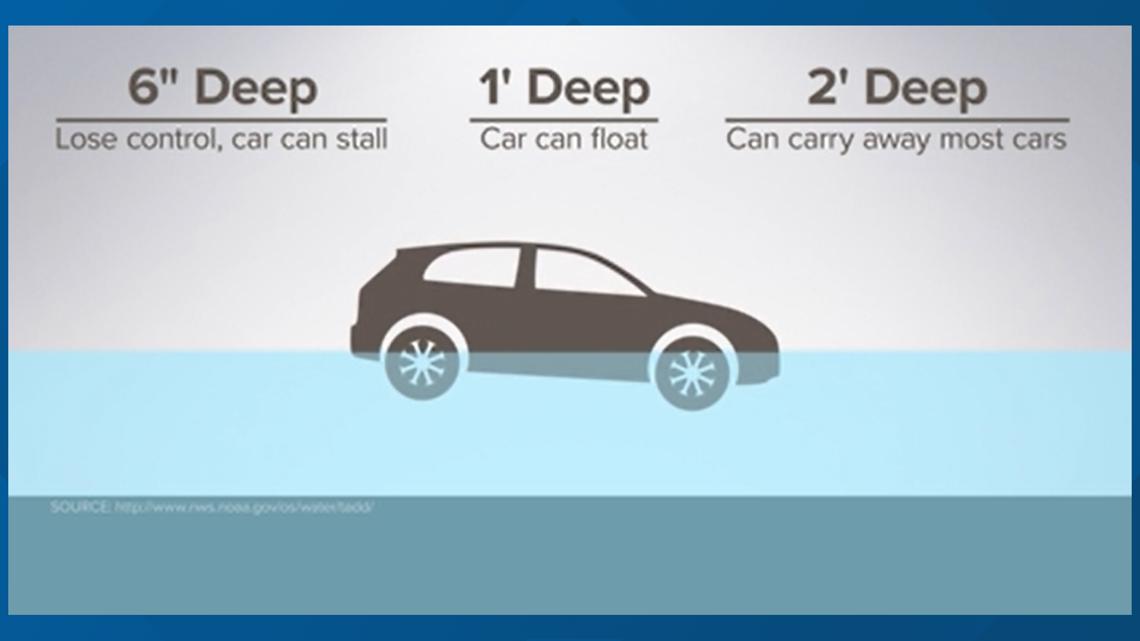
Credit: www.wfmynews2.com
The Science: Why Heavy Cars Float Like Boats
You might wonder how a heavy car floats. A car weighs about 3,000 to 4,000 pounds. That is very heavy. How can water lift it?
It comes down to simple science. It is called buoyancy.
Understanding Buoyancy in Simple Terms
Imagine you are in a bathtub. When you sit down, the water goes up. You push the water away to make room for your body. This is called displacement.
Water does not like to be pushed away. It pushes back. It pushes up against you. This upward push is buoyancy.
If the push of the water is stronger than the weight of the object, the object floats.
The Role of Tires (Your Car’s Life Jackets)
Your car has four big pockets of air. We call them tires. Think of them like life jackets.
Air is very light. It wants to float. When you drive into deep water, your tires act like balloons. They want to lift the car up.
This makes the car lighter in the water. It makes it easier for the water to lift the whole vehicle.
Displacement: How Water Lifts 4,000 Pounds
Cars are big. They have a lot of space underneath them. They are not solid blocks of steel. The bottom of a car is wide and flat.
This shape is a lot like a boat.
When a car goes into the water, it pushes a lot of water away. The water pushes back with a lot of force.
It does not take much depth to lift a car. The air in the tires and the shape of the body do the work. The water wins.
How Many Inches of Water Can Float a Car? The Depth Guide
Now, let’s answer the big question. How many inches of water can float a car?
The National Weather Service (NWS) has strict warnings about this. The numbers are small. They are scary small.
The Danger of 6 Inches (Loss of Control)
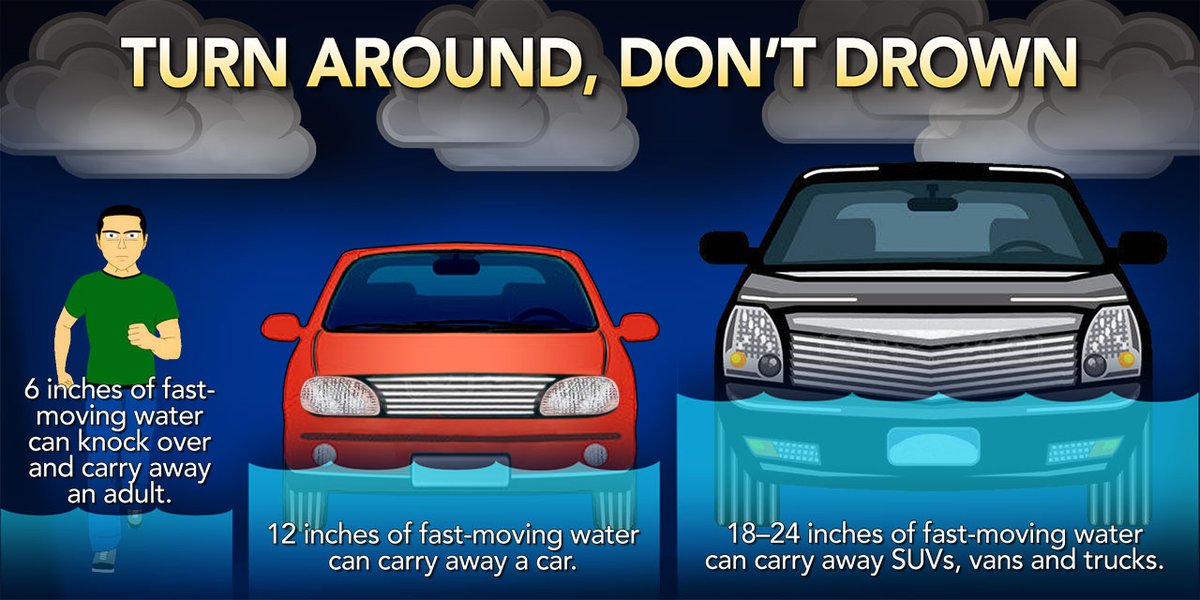
It starts with just six inches. That is only half a foot. It is about the height of your ankle.
Most passenger cars sit low to the ground. Six inches of water reaches the bottom of the car.
At this depth, two bad things happen:
- The Exhaust: Water can splash into your tailpipe. This can stall your engine.
- Loss of Friction: The water splashes up under your tires. You lose your grip on the road.
You might not float yet. But you will lose control. You cannot steer. You cannot brake well.
Credit: www.stpaul.gov
The Danger of 12 Inches (Floating Begins)
This is the danger zone for most cars. One foot of water. That is about up to your shin.
At 12 inches, a small car will float.
The water lifts the car up. The tires lose contact with the road. Now, you are not a driver. You are a captain of a boat with no rudder.
The water moves the car. You can spin. You can drift. You are at the mercy of the current.
The Danger of 18-24 Inches (Swept Away)
What about big trucks? What about SUVs?
Many people buy trucks to feel safe. They think, “I am high up. I can make it.”
This is a dangerous myth. Flood water depth for trucks is not much higher than for cars.
At 18 to 24 inches (two feet), almost any vehicle will float. This includes:
- Large SUVs.
- Pickup trucks.
- Jeeps.
Two feet of water has amazing power. It can push a truck off the road. It can flip a vehicle over.
Does Speed of Water Matter?
Yes. Speed changes everything.
Still water is dangerous. Moving water is deadly.
If the water is moving, it hits your car like a hammer. It does not just lift you. It pushes you.
Two feet of rushing water can carry away a heavy bus. Never trust moving water.
Vehicle Types: Do Trucks Float Differently Than Sedans?
Not all cars are the same. Some are small. Some are big. But the water does not care much. Let’s look at the differences.
Compact Cars and Sedans
Small cars are light. They are low to the ground. They are the first to float.
If you drive a small car, be very careful. Six inches is enough to cause trouble. Twelve inches is a full emergency. Do not risk it.
SUVs and Pickup Trucks: False Security?
I see this all the time. A big truck drives past a waiting line of cars. The driver thinks they are invincible.
Trucks are heavier. They have bigger tires. This helps a little bit. But it also hurts.
Bigger tires hold more air. That means more buoyancy.
Also, trucks have a high center of gravity. They are top-heavy. If the water pushes them sideways, they tip over easily.
Do not think your truck is a boat. It is not.
Electric Vehicles (EVs) in Flood Water
Electric cars are becoming common. How do they handle floods?
EVs are very heavy. Their batteries weigh a lot. This might keep them on the ground a little longer.
But water and electricity do not mix.
EV batteries are sealed well. But they are not submarines. If salt water gets in, it can cause a fire later. It can ruin the car instantly.
Also, EVs have a lot of torque. If you hit the gas in water, the wheels spin fast. You will lose control faster than a gas car.
The Hidden Dangers Under the Surface
The water is not the only problem. The problem is what you cannot see.
When I faced that flooded road in 2018, I could not see the asphalt. I had to guess where the road was.
Washed Out Roads and Sinkholes
Flood water is dirty. It is brown and muddy. You cannot see the bottom.
Sometimes, the road is gone. The water has washed away the dirt under the asphalt.
If you drive in, your car falls. You fall into a hole.
This happens a lot. The road looks flat. But it is a trap.
Debris and Hidden Obstacles
Floods move things. They move trees. They move trash cans. They move rocks.
A sharp branch can pop your tire. A rock can smash your oil pan.
If you hit something underwater, you stop. Now you are stuck in rising water.
The Power of Moving Water (Hydraulic Force)
Water is heavy. One cubic yard of water weighs 1,700 pounds.
Imagine a thousand people pushing against your car. That is what a flood feels like.
This force is called hydraulic pressure. It is why bridges break. It is why cars get crushed.
Real-World Experience: What It Feels Like to Lose Control
I want to go back to my story for a moment. I want to tell you what it feels like.
When your car starts to float, it gets quiet. The rumble of the tires stops. The steering wheel goes loose. It feels dead in your hands.
Then, the panic sets in.
You turn the wheel left. The car goes right. You hit the brakes. Nothing happens.
It is a helpless feeling. You are just a passenger.
This is why we talk about car buoyancy physics. Not for school. But for survival.
Step-by-Step Survival Guide: If You Get Stuck
Okay. We talked about the danger. Now let’s talk about solutions.
What if the worst happens? What if you are in the water?
You need a plan. You need to act fast.
The Golden Rule: Turn Around Don’t Drown
The best way to survive is to stay dry.
The National Weather Service has a slogan: Turn Around Don’t Drown.
If you see water on the road, stop. Turn around. Find another way.
It does not matter if you are late. It does not matter if it is a long detour. Your life is worth more than a few minutes.
Immediate Actions if Water Rises
Maybe the water came up fast. Maybe you didn’t see it. Now you are stuck.
- Stay Calm. Panic kills. Take a deep breath.
- Do Not Restart the Engine. If your car stalls, do not try to start it. This will suck water into the engine. It will ruin the car.
- Check the Depth. Look out the window. Is the water rising?
How to Escape a Sinking Car (S.W.O.C Protocol)
If the water is deep and rising, get out. Do not wait for help.
Memorize this acronym: S.W.O.C.
- S – Seatbelts Off: Do this first. You cannot move if you are tied down.
- W – Windows Down: Open the window immediately. You need a way out. Electric windows usually work for a few minutes in water.
- O – Out Immediately: Climb out the window. Do not stay in the car.
- C – Children First: Push the kids out the window first. Then you follow.
Why You Should Never Open the Door
This is very important. Do not try to open the door.
Why? Because of the pressure.
Remember that heavy water? It is pushing against the door. You cannot push back. No human is strong enough.
If you waste energy pushing the door, you will get tired. You will lose time.
Use the window. It is your only exit.
Pro Tip: Buy a window breaker tool. Keep it in your center console. If the power fails, you can smash the glass.
After the Flood: Assessing Your Vehicle
Let’s say you are safe. The water goes down. Now you have a wet car.
Car water damage repair is tricky.
Signs of Water Damage
Look for mud. Look for mold. Smell the carpets.
If the water went above the floor, you have big problems.
Electrical System Checks
Modern cars are full of wires. Computers control everything.
Water ruins electronics. It causes rust. It causes shorts.
Your car might start today. But in a month, the airbags might fail. The brakes might fail.
When to Call the Insurance Company
Call them right away. Tell them what happened.
Flood damage is usually covered by “Comprehensive” insurance. It is not “Collision.”
Do not try to dry it yourself. Let the pros handle it.
Frequently Asked Questions (FAQ)
Here are some common questions. I hear these a lot.
How many inches of water can float a car?
It takes about 12 inches of water to float a standard car. Small cars may float sooner. Larger trucks may take 18 to 24 inches. But you lose control at just 6 inches.
Is it safe to drive through 4 inches of water?
It can be safe if you go very slow. But be careful. 4 inches can hide potholes. It can hide sharp rocks. If the water is moving, do not drive through it.
What happens if water gets in my engine?
This is called “hydrolock.” Water cannot be compressed like air. If water gets in the cylinders, the pistons break. The engine is destroyed instantly. It is very expensive to fix.
Can I open my car door underwater?
No. The pressure of the water outside is too strong. You must wait for the pressure to equalize, which means the car must fill with water. That is too dangerous. Use the window.
Does car insurance cover flood damage?
Yes, usually. You need “Comprehensive” coverage on your policy. If you only have “Liability,” it will not cover flood damage. Check with your agent.
Why do tires make cars float?
Tires are full of air. Air is lighter than water. The tires act like buoys. They lift the car up. The bigger the tire, the more air it holds.
Conclusion: Safety First, Always
We have covered a lot today. We learned the science. We shared stories.
So, let’s recap. How many inches of water can float a car?
- 6 Inches: You lose control.
- 12 Inches: You start to float.
- 24 Inches: Even trucks are swept away.
Next time it rains, think of this guide. Think of the physics.
Do not trust the puddle. Do not trust the truck in front of you. Trust your instincts.
If you see a flooded road, turn around. It is the smartest move you can make.
Stay safe out there. The road will be there when the water is gone. You need to be there too.