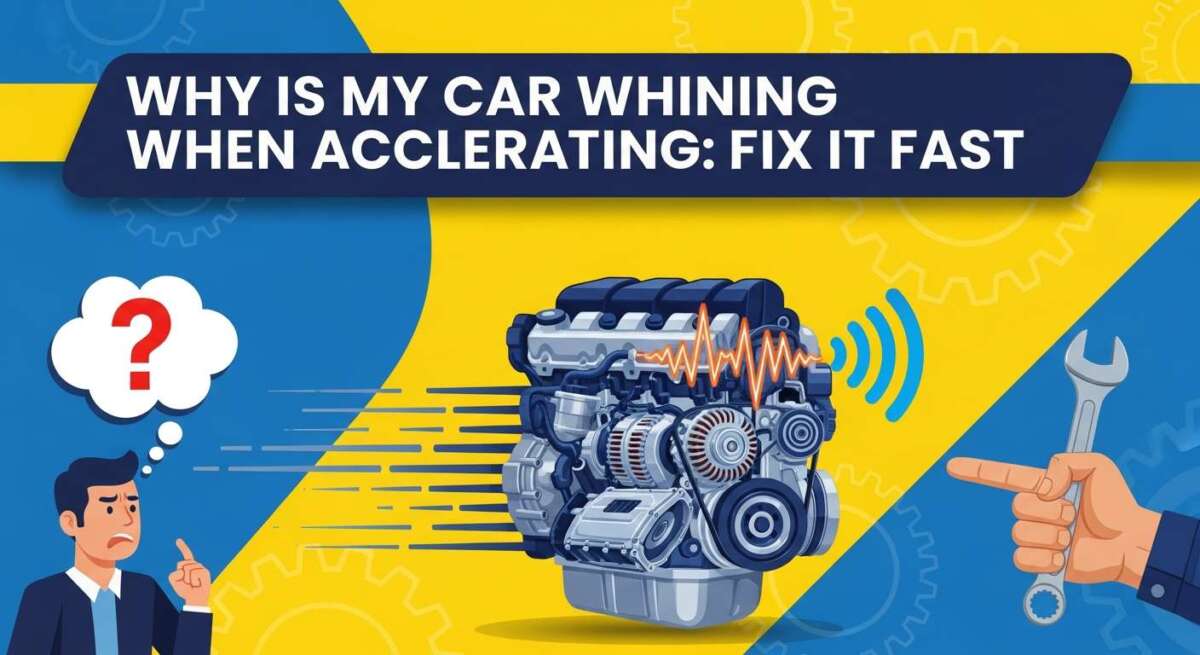
Why is My Car Whining When Accelerating: Fix It Fast
It was a cold Tuesday morning. I hopped into my truck. I turned the key. The engine started. But then, I heard it. A high-pitched sound. It sounded like a jet engine taking off.
I pressed the gas pedal. The noise got louder. Whirrrrrr.
My heart sank a little. I knew that sound. You might know it too. It is annoying. It is also scary. You ask yourself, “Is my car safe?” or “Will this cost a lot of money?”
If you are hearing a whine when you speed up, you are in the right place. I have fixed hundreds of cars with this exact problem. I want to help you figure it out.
In this guide, we will look at why your car is whining. We will check the parts. We will look at fixes. I will share my own stories from the shop. We will keep it simple. We will keep it safe.
Let’s get your car quiet again.
Safety First: Please Read This
Warning: Cars have moving parts. They have hot fluids. Before you open the hood, turn off the engine. Let the car cool down. Never touch a moving belt or fan. Keep loose clothes and hair away from the engine. If you are not sure, ask a pro. Your safety is number one.
The Big Picture: What Causes the Noise?
Cars are complex machines. They have thousands of parts. Many of these parts spin. When they spin, they can make noise.
Usually, a whine comes from friction. Two parts are rubbing together. Or, a bearing is dry. Sometimes, fluids are low.
Think of a water bottle. If you blow across the top, it whistles. Car parts can do the same thing.
When you press the gas, the engine spins faster. The belts spin faster. The transmission pumps fluid faster. So, the noise gets higher. This is a clue. It tells us the problem is linked to engine speed.
We call this engine RPM. If the pitch goes up with RPM, we look at the engine. If it goes up with speed, we look at the wheels.
Let’s break down the usual suspects.

Credit: www.wikihow.com
Transmission Troubles: The Usual Suspect
The transmission is a common cause. It changes gears for you. It uses fluid to do this.
When I work on cars, I check this first. Why? Because a transmission whine is distinct. It sounds like a siren.
Automatic Transmission Whine
Most cars today are automatic. They use a torque converter. This part sits between the engine and transmission. It is full of fluid.
If the torque converter is bad, it whines. It usually whines when you are stopped but in gear. It gets louder when you go. This is a classic bad torque converter noise.
Also, there is a fluid pump inside. If the pump is worn, it whines. It is working too hard.
Manual Transmission Whine
Do you drive a stick shift? The noise might be different.
Manual transmissions have gears with teeth. Over time, these teeth wear down. They get sharp. When they mesh, they whine.
Also, there is a throw-out bearing. You use this when you press the clutch. If the whine happens only when you press the clutch, it is likely this bearing.
Low or Dirty Transmission Fluid
This is the most common issue.
Transmission fluid acts like a cushion. It sits between metal parts. It stops them from touching.
If fluid is low, air gets in. Air bubbles pop. This causes cavitation. That is a fancy word for air pockets exploding. It makes a whining sound.
Pro Tip: Check your dipstick. Is the fluid bright red? That is good. Is it dark brown or black? That is bad. Does it smell like burnt toast? If so, you need a change fast.
Keyword Check: If you hear a transmission whining noise at low speeds, check the fluid first.
Power Steering: The Steering Wheel Groan
Does the noise happen when you turn?
If yes, look at the power steering. This system helps you turn the wheel easily. It uses a pump. The pump pushes fluid.
The “Morning Sickness” Phenomenon
In the cold, fluids get thick. Thick fluid is hard to pump.
I had a customer named Sarah. She had an old Ford. Every morning, her car would whine. It sounded terrible. After five minutes, it stopped.
We call this “morning sickness.” The fluid is cold. It creates a whine. Once it warms up, it flows better. The noise goes away.
If this happens, try changing the fluid. New fluid flows better in the cold.
Air in the System
This is a personal favorite fix of mine.
I once worked on a Honda Pilot. The owner was ready to buy a new pump. The pump cost $400.
I looked closer. There was a tiny O-ring on a hose. It was old. It was hard. It let air into the pump. The air made the fluid foam. Foam makes a loud whine.
I replaced the O-ring. It cost $2. The noise vanished.
Lesson: Sometimes, it is a small leak. Air enters the system. It causes a power steering whine when accelerating.
Low Power Steering Fluid
Just like the transmission, low fluid causes noise.
The pump runs dry. Metal touches metal. It screams.
Check the reservoir. It usually has a cap with a steering wheel icon. Is it full? If not, top it off. But be careful. Use the right fluid. Some cars use specialized fluid. Some use Automatic Transmission Fluid (ATF). Check your manual.

Credit: www.youtube.com
Alternator and Electrical Whines
Your car makes electricity. The alternator does this job. It spins very fast.
Worn Alternator Bearings
The alternator has a pulley. Inside, there are bearings. These are small metal balls. They help it spin smoothly.
They spin thousands of times a minute. Eventually, they wear out. They get pitted.
When they wear, they grind. This creates a high-pitched whine. It sounds like a drill.
Keyword Check: Look for alternator whining noise symptoms. These include dim lights or a battery light on the dash.
Electrical Interference (Stereo Whine)
Does the whine come from the speakers?
This is weird, right? You press the gas. The radio whines.
This is electrical noise. We call it a “ground loop.” The alternator makes “dirty” electricity. A filter usually cleans it. If the ground wire is bad, the noise leaks. It leaks into your stereo.
Turn off the radio. Does the noise stop? If yes, it is electrical. It is not mechanical. Your engine is fine. You just need to fix the stereo wiring.
Belts and Pulleys: The Squeal and Whine
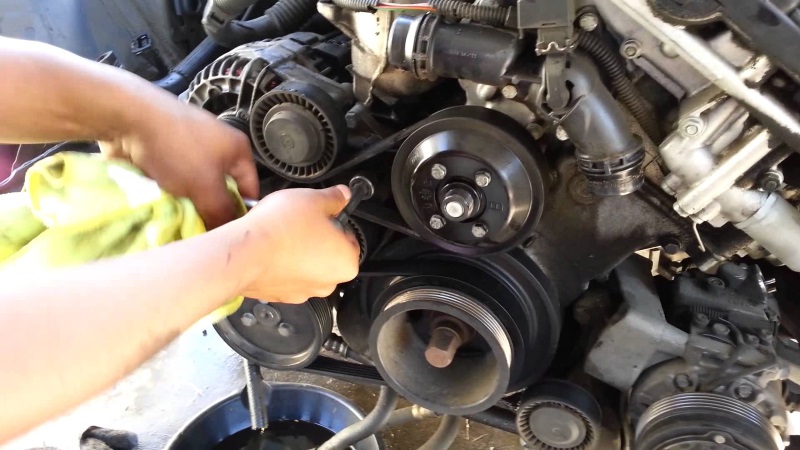
Pop the hood. See that black rubber belt? That is the serpentine belt. It snakes around everything.
The Serpentine Belt
This belt drives the alternator. It drives the power steering. It drives the water pump.
If it gets loose, it slips. A slipping belt squeals. It is very loud. It sounds like a screech.
However, a glazed belt whines. “Glazed” means it is hard and shiny. It lost its grip. It sings as it spins.
Keyword Check: A serpentine belt squeal is often sharp and sudden. A whine is constant.
Idler and Tensioner Pulleys
The belt needs to be tight. A tensioner pulley does this. It has a spring. It also has a bearing.
Remember the alternator bearings? These are the same. If the grease dries up, they whine.
I keep a stethoscope in my toolbox. I put it on the tensioner bolt. I listen. If I hear grinding, I know the bearing is toast.
Drivetrain Noises: Differentials and Bearings
Sometimes, the noise is under the floor.
Rear Differential Whine
Do you have a truck? Or a rear-wheel-drive car?
You have a differential in the back. It is a pumpkin-shaped metal ball. It splits power to the wheels.
Inside, there are gears. The ring and pinion gears mesh together. If they are worn, they howl.
Keyword Check: A rear differential whine usually happens at specific speeds. It might sing at 40 MPH. Then it stops at 50 MPH. It changes when you let off the gas.
If the noise changes when you coast, check the differential. It might need fluid. Or, the gears might be worn.
Wheel Bearings
Each wheel has a bearing. It supports the car’s weight.
A bad wheel bearing hums. As you go faster, the hum turns into a whine.
Test: Drive safely. Swerve gently left. Then swerve right. Does the noise change?
If you turn left and the noise stops, the bad bearing is on the left. You took the weight off it. This is a classic mechanic trick.
Turbocharger Whine: The Dentist Drill Sound
Does your car have a turbo?
Turbos spin incredibly fast. We are talking 150,000 RPM.
A healthy turbo whistles. It is a soft sound. We like this sound.
But a bad turbo sounds like a dentist’s drill. It is sharp. It is loud.
This could mean the blades are touching the housing. Or, you have a “boost leak.” Air is escaping a hose.
If you hear a loud drill sound, stop. A broken turbo can suck metal into the engine. That destroys the engine.
DIY Diagnosis: Be Your Own Detective
You don’t need expensive tools. You can diagnose this in your driveway.
The Park vs. Drive Test
This is step one.
- Start the car.
- Put it in Park (or Neutral).
- Press the gas gently.
Result A: You hear the whine.
- The problem is the Engine.
- Check the Alternator.
- Check the Power Steering Pump.
- Check the Belt.
Result B: You hear silence.
- The problem is the Drivetrain.
- The engine is spinning, but the wheels are not.
- If the noise only starts when you move, check the Transmission.
- Check the Wheel Bearings.
- Check the Differential.
The Steering Test
- Park the car.
- Turn the wheel left and right.
- Do not press the gas.
Result: Does it whine?
- Yes: It is the Power Steering Pump.
- No: It is likely something else.
Using a Mechanic’s Stethoscope
This is my secret weapon.
You can buy one for $10. It looks like a doctor’s tool. But it has a metal probe.
Safety: Be careful. Do not touch moving belts.
Touch the probe to the alternator body. Listen. Touch it to the power steering pump. Listen.
The noise will be loudest at the source. It is like magic. You will pinpoint the bad part instantly.
DIY Hack: Don’t have a stethoscope? Use a long screwdriver. Put the metal tip on the part. Put the handle to your ear. It works! But please, watch your hair and hands.
Credit: grimmermotors.co.nz
Step-by-Step Fixes You Can Do at Home
Found the problem? Let’s try to fix it.
Checking and Topping Off Fluids
This fixes 50% of whining noises.
- Transmission Fluid: locate the dipstick. Pull it out. Wipe it. Put it back. Pull it out again. Is it in the “Full” range? If not, add fluid. Use a funnel. Crucial: Use the exact fluid listed in your manual.
- Power Steering Fluid: Locate the reservoir. It is usually clear plastic. Look at the lines on the side. Is it below “Min”? Fill it to “Max”.
The “Spray Bottle” Test for Belts
Think your belt is slipping?
- Get a spray bottle with water.
- Start the engine.
- Spray a mist on the belt.
Result: Does the noise stop for a second?
- Yes: The belt is slipping. The water helped it grip. You need a new belt or tensioner.
- No: The noise is internal (like a bearing).
Bleeding the Power Steering System
Did you add fluid but it still whines? You might have air bubbles.
- Jack up the front of the car. (Safety: Use jack stands).
- Take the cap off the reservoir.
- Turn the wheel lock-to-lock. Left all the way. Right all the way.
- Do this 20 times. Engine off.
- Check the fluid level. It might drop as air leaves. Top it up.
This pushes the air out. It is a free fix.
When to Call a Pro
I love DIY. But sometimes, you need a pro.
Go to a shop if:
- The Transmission Whines: Internal transmission work is hard. It requires special tools. It is easy to mess up.
- The Timing Belt Whines: This is inside the engine. If this belt breaks, your engine dies. Don’t risk it.
- The Noise is extremely loud: If it sounds like metal grinding metal, stop driving. Tow it.
Cost Breakdown (Estimates):
- New Belt: $50 – $150 (Cheap).
- Power Steering Pump: $200 – $600 (Moderate).
- Alternator: $300 – $600 (Moderate).
- Transmission Rebuild: $2000 – $5000 (Expensive).
As you can see, catching it early saves money. A $20 fluid change is better than a $3000 rebuild.
Frequently Asked Questions (FAQs)
Q: Can I drive my car if it is whining?
A: It depends on the sound. If it is soft, you can drive briefly. Go straight to a shop. If it is loud or grinding, do not drive. You could cause major damage. A whining oil pump could kill your engine in miles.
Q: Why does my car whine when I accelerate but stops when I coast?
A: This is likely the differential or transmission. These parts are under “load” when you accelerate. When you coast, the load is gone. The gears separate slightly. The noise stops. This confirms the issue is in the drivetrain gears.
Q: Can cold weather cause whining?
A: Yes, absolutely. Fluids get thick in the cold. Thick oil does not flow well. The pump struggles to suck it in. This creates a temporary whine. If it goes away after 5 minutes, it is usually okay. If it stays, change the fluid to synthetic.
Q: How do I know if it is the transmission or the engine?
A: Do the Neutral test. Put the car in Neutral. Rev the engine. If the noise happens, it is the engine (Belt, Alternator, Power Steering). If the noise is gone, it is the transmission or wheels. They only move when the car moves.
Q: Why is my car making a high-pitched noise when accelerating?
A: A high-pitched noise is often a vacuum leak or a belt. A belt squeals. A vacuum leak whistles. Check your hoses. Check the black rubber intake tube. Look for cracks. A small crack makes a high-pitched whistle.
Conclusion
A whining car is like a crying baby. It is trying to tell you something.
It might be thirsty (low fluid). It might be tired (worn bearings). Or, it might just be cold.
We covered a lot today. We talked about transmissions. We looked at power steering. We listened to alternators.
Remember my story about the $2 O-ring? That is the takeaway. Not every noise is a disaster. But every noise needs attention.
Start with the simple stuff. Check your fluids. Look at the belts. Use the “screwdriver stethoscope” trick (carefully!).
If you catch why your car is whining when accelerating early, you win. You save money. You stay safe.
So, pop that hood. Take a look. You might just fix it yourself.
Drive safe out there!