How Long for Car Engine to Cool down: Quick Guide
Imagine this. You just got home. The drive was long. You park the car. You want to check the oil. Or maybe you want to wash the car. But the hood feels hot. Really hot. You ask yourself, “Is it safe yet?”
We have all been there. It is a simple question. How long for car engine to cool down? But the answer is vital. It keeps you safe. It keeps your car safe.
I am Dan. I have fixed cars for over 20 years. I have seen many burns. I have seen cracked engines. I want to help you avoid that. I want to share my tips. I want to make sure you stay safe.
In this guide, we will talk about time. We will talk about heat. We will keep it simple. You will learn exactly when to open that hood.
The Short Answer: How Long Should You Wait?
You are in a rush. I get it. You want the quick answer.
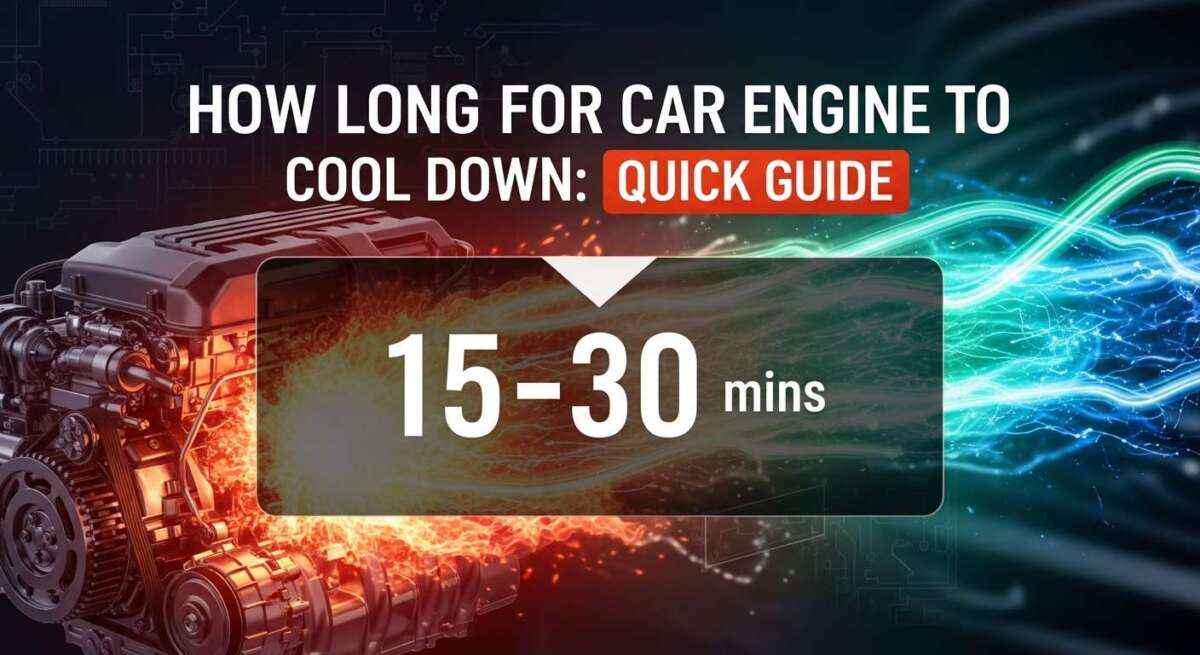
You should wait at least 30 minutes.
That is the golden rule. In 30 minutes, the engine cools down a lot. It becomes safe to touch most parts. The metal is not scorching hot anymore.
But, there is a catch.
Do you want to open the radiator cap? Then you must wait longer. You should wait one hour. Or even more. The radiator is under pressure. It holds hot water. It holds steam. If you open it too fast, it explodes. It is like a shaken soda can. But with boiling water.
So, remember this list:
- Checking Oil: Wait 15 to 20 minutes.
- Touching the Engine: Wait 30 minutes.
- Opening Radiator: Wait 60 minutes.
This saves your skin. Literally. It also saves your wallet. Opening things too fast can break them. Patience is free. Repairs are expensive.
My Painful Lesson
Let me tell you a story. It was 2005. I had an old sedan. It was overheating. I was young. I was impatient. I saw steam. I pulled over. I popped the hood right away.
I grabbed the radiator cap with a rag. I twisted it.
Boom.
Steam shot out. Green water sprayed everywhere. It hit my hand. It hurt. It hurt a lot. I had to go to the doctor. I had burns. I learned my lesson that day. I never rush cooling time anymore. Now, I wait. You should too.
Credit: www.paulsautorepair.com
Why Does My Engine Get So Hot?
Your car is a machine. It burns fuel. Burning fuel creates fire. Fire creates heat.
Think of your engine like a stove. When you drive, the stove is on. The metal gets hot. The oil gets hot. The water inside gets hot.
A normal car runs hot. The normal engine operating temperature is high. It is usually between 195 and 220 degrees Fahrenheit. That is boiling hot. Water boils at 212 degrees. Your engine is often hotter than boiling water.
So, when you turn the key off, the heat stays. Iron holds heat well. Aluminum holds heat well. It takes time for that heat to leave. The air needs to take it away.
5 Main Factors That Affect Cooling Time
Not all cars are the same. Not all days are the same. Sometimes it takes 20 minutes. Sometimes it takes two hours. Why?
Here are the five main things that change the time.
1. The Weather Outside
This is the biggest factor. Is it winter? Or is it summer?
- In Winter: The air is cold. Cold air steals heat fast. Your car might cool in 20 minutes. The wind helps too.
- In Summer: The air is hot. Hot air does not take heat well. On a 90-degree day, your car stays hot. It might take an hour to cool down.
2. The Size of Your Engine
Think about a cup of tea vs. a pot of soup. Which cools faster? The small cup cools faster.
- Small Engines: A 4-cylinder engine is small. It has less metal. It cools down fast.
- Big Engines: A V8 engine is huge. It has a lot of heavy metal. It holds a lot of heat. It takes a long time to cool.
3. The Material of the Engine
Engines are made of metal. But different metals act differently.
- Aluminum: Many new cars use aluminum. It is light. It loses heat fast.
- Cast Iron: Older cars use iron. Trucks use iron. Iron is heavy. It holds heat for a long time. An iron engine stays hot for hours.
4. Where You Park
Location matters.
- Garage: A garage has no wind. The heat sits there. The car stays hot longer.
- Driveway: The driveway has wind. The breeze hits the grill. It cools the car faster.
- Shade: Shade is good. The sun adds heat. Shade blocks the sun.
5. Insulation
New cars are quiet. They have plastic covers. They have blankets under the hood. This stops noise. But it also traps heat.
It is like wearing a coat. The engine wears a coat. It stays warm. Old cars did not have covers. They cooled faster. New cars take longer because they are insulated.
Signs of an Overheated Engine
Sometimes, a car gets too hot. This is bad. You need to know the signs. You need to know when to stop.
If you see these signs of an overheated engine, stop driving.
The Temperature Gauge
Look at your dashboard. You see a gauge. It has a ‘C’ for Cold. It has an ‘H’ for Hot.
The needle should be in the middle.
- Middle: Good. Safe.
- Rising: Be careful.
- Red Zone: Danger! Stop now.
If the needle hits the red, pull over. Do not guess. Do not hope. Just stop.
Steam and Smoke
This is scary. You see white puffs. They come from the front.
- Steam: It looks like white fog. It disappears fast. This is usually water or coolant.
- Smoke: It looks blue or black. It smells bad. It stays in the air. This is oil or fire.
If you see steam, you have a leak. A hose might be broken. The radiator might have a hole.
The Smell Test
Your nose is a tool. Use it.
- Sweet Smell: It smells like syrup. It smells like candy. This is coolant. Coolant contains sugar-like chemicals. If you smell syrup, you have a leak.
- Burnt Smell: It smells like burnt toast. Or burnt rubber. This means oil is leaking. Or a belt is melting.
- Hot Metal: It smells like a clothes iron. This means the engine is excessively hot.
Ticks and Clicks
Listen to your car. When you turn it off, listen.
Do you hear tick, tick, tick?
This is normal. It is the metal shrinking.
But if you hear loud knocking while driving, that is bad. That means the heat is hurting the metal.
Real World Scenario: Cooling Down an Overheated Car
Let me share another experience.
I was driving a truck. It was July. It was very hot. I was towing a trailer. Suddenly, the gauge went red. A light flashed.
I was scared. But I knew what to do. I want you to know too. Here is the process for cooling down an overheated car.
Step 1: Turn Off the AC
The air conditioner uses engine power. It creates heat. Turn it off.
Actually, turn on the Heater.
Yes, the heater. Turn it to full blast. Open your windows. The heater pulls heat from the engine. It blows it into the car. It gets hot inside, but it saves the engine.
Step 2: Pull Over Immediately
Do not drive home. Do not drive to the next exit.
Find a safe shoulder. Turn on your hazard lights. Stop the car.
Every second counts. Driving hot warps the metal. Warped metal ruins engines.
Step 3: Turn Off the Engine
Key off. Immediately.
Stop the fire. Stop the heat. Let the air work.
Step 4: Do NOT Open the Hood Yet
This is hard. You want to look.
But steam might rush out. The latch might be hot.
Wait 10 minutes. Let the steam die down. Let the pressure drop.
Touch the hood gently. Is it burning hot? Keep waiting.
Step 5: Open the Hood Carefully
After 10 or 15 minutes, try the latch.
Use a glove. Or use a rag.
Lift the hood. This lets the hot air out. It is like taking the lid off a pot. The heat escapes. The cool air comes in.
Step 6: The Long Wait
Now, you wait.
You cannot add water yet. Cold water cracks hot metal.
You must wait 30 to 45 minutes. The engine must be cool to the touch.
Only then can you check things. Only then can you call for help.

Credit: www.wikihow.com
How to Check Coolant Level Safely
Once you have waited, you need to check the fluids. Coolant is the green or pink liquid. It keeps the engine cool.
Checking it is easy. But you must do it right. You need to know about checking coolant level safely.
Locate the Reservoir
Look for a plastic tank. It is usually clear or white. It is near the side of the engine. It has lines on it.
- One line says “MIN” (Minimum).
- One line says “MAX” (Maximum).
You can see the liquid through the plastic. You do not need to open it.
- Is liquid between the lines? You are good.
- Is it empty? You need to add coolant.
The Radiator Cap Check
Sometimes, the tank is dirty. You cannot see. You might need to check the radiator cap.
This is the dangerous part. The cap is metal. It is on top of the radiator.
The Squeeze Test
Before you touch the cap, find the big rubber hose. It connects to the radiator.
Squeeze it.
- Is it hard? Is it stiff like a tennis ball? STOP. The system is under pressure. It is hot. Do not open the cap.
- Is it soft? Does it squish easily? This means the pressure is gone. It is likely safe.
The Touch Test
Tap the cap quickly with a finger. Is it hot?
If you cannot keep your hand on it for 5 seconds, do not open it.
If it feels warm or cool, you can proceed.
Use a thick rag. Cover the cap. Push down and twist slowly. Let any last air escape. Then remove it.
The Dangers of Rushing the Process
Why am I so strict about waiting? Why do I tell you to wait 30 minutes?
Because rushing is dangerous. It hurts you. It hurts the car.
Steam Burns
I told you my story. Steam is invisible sometimes. It is hotter than boiling water. It expands instantly.
If you open a hot cap, the water boils instantly. It sprays. It covers your face and hands.
This is the most common injury for mechanics. It happens to pros. It happens to beginners. It is not worth it.
Thermal Shock
Your engine is made of metal. Metal expands when hot. It shrinks when cold.
Imagine your engine is 220 degrees. You pour 60-degree water into it.
The metal cools too fast. It snaps. It cracks.
This is called Thermal Shock.
It can crack the engine block. It can crack the cylinder head.
A cracked block means a dead engine. You need a new engine. That costs thousands of dollars.
Never pour cold water into a hot engine. Wait for it to cool.
Warped Heads
The cylinder head sits on top. It seals the engine.
If it gets too hot, it warps. It bends like a banana.
Then, the seal breaks. Oil mixes with water. The engine loses power.
This is a “blown head gasket.” It is an expensive repair.
Patience prevents this. Letting the car cool naturally prevents warping.
Understanding Your Car’s Cooling System Basics
To take care of your car, you should know how it works. You do not need to be a mechanic. You just need the basics.
Let’s look at the engine cooling system basics.
The Water Pump: The Heart
Your body has a heart. It pumps blood.
Your car has a water pump. It pumps coolant.
The pump spins. It pushes the liquid through the engine. It keeps the flow moving. If the pump stops, the liquid sits. It boils. The engine overheats.
The Radiator: The Lungs
Your body has lungs. They cool your blood with air.
Your car has a radiator. It is the big metal grid at the front.
The hot water goes into the radiator. The air hits the grid. The water cools down.
Then, the cool water goes back to the engine. It is a cycle.
The Thermostat: The Gatekeeper
This is a small valve. It is like a traffic cop.
- Engine Cold: The thermostat stays closed. It keeps the water in the engine. It helps the engine warm up fast.
- Engine Hot: The thermostat opens. It lets the water go to the radiator. It starts the cooling.
If the thermostat breaks, it stays closed. The engine cooks itself.
The Radiator Fan
This is the fan behind the radiator.
Radiator fan function is simple. It pulls air.
When you drive fast, the wind cools the radiator.
When you stop in traffic, there is no wind. The fan turns on. It creates its own wind.
Have you heard a fan buzzing after you park? That is the radiator fan. It is working hard to cool the engine down. It is normal.
Tips to Make Your Engine Cool Faster
You are in a hurry. You cannot wait an hour. Is there a way to speed it up?
Yes. There are tricks. I use them in the shop. You can use them too.
1. Pop the Hood
We talked about this. Heat rises. The hood traps it.
Open the hood. Prop it up.
The hot air flies away. The cool air rushes in.
This cuts the cooling time in half. Instead of an hour, it might take 30 minutes.
2. Park in the Shade
Do not park in the sun. The sun heats the metal.
Find a tree. Find a shadow.
If you can, park facing the wind. Let the breeze blow into the grille.
3. Open the Windows
This sounds strange. But heat can stay inside the cabin too.
The heater core is inside the dash. It holds hot water.
If you open the windows, the car cools down. The dash cools down. It helps a little bit.
4. Use a House Fan
Are you at home? Do you have a box fan?
Plug it in. Point it at the engine.
This forces air over the metal. It works like the car’s fan, but bigger.
This is the fastest way to cool an engine in a garage.
What NEVER to Do
I see people try crazy things. Do not do these.
- Do not spray water on the engine. Cold hose water on hot metal causes cracks. It ruins the electronics.
- Do not put ice on the engine. It melts too fast. It makes a mess. It causes shock.
- Do not drain the oil. Hot oil burns. Draining it does not help the metal cool safely.

Credit: www.wikihow.com
Preventive Maintenance for a Cool Engine
You now know how to cool an engine. But how do you keep it cool while driving? The best fix is prevention. You want to stop heat before it starts.
Maintenance is key. It is cheaper than repairs. Here is what I tell my customers to do.
Flush Your Coolant Regularly
Coolant gets old. It turns acidic. It eats the metal inside your engine.
Old coolant cannot hold heat well.
Recommendation: Flush your coolant every 30,000 to 50,000 miles. Check your owner’s manual. Fresh fluid keeps the system clean. It keeps the temperature down.
Watch for Driveway Puddles
Your driveway tells a story. Look at the ground where you park.
- Green or Pink Puddle: This is coolant. You have a leak.
- Red Puddle: This is transmission fluid.
- Brown Puddle: This is oil.
If you see spots, do not ignore them. A small leak becomes a big problem fast. A leaking system loses pressure. Low pressure leads to boiling.
Clean the Grille
Look at the front of your car. That grid is the grille.
Leaves get stuck there. Bugs get stuck there. Dirt builds up.
This blocks the air. The radiator needs air to breathe.
Take a hose. Spray the grille gently. Wash away the bugs. This helps the radiator work better. It is free and easy.
Inspect Belts and Hoses
Rubber does not last forever.
- Hoses: Squeeze the radiator hoses when the engine is cold. They should feel firm. If they feel spongy or soft, replace them. If they have cracks, replace them.
- Belts: Look at the serpentine belt. It spins the water pump. If it breaks, the pump stops. The engine overheats instantly. If the belt looks frayed, change it.
Frequently Asked Questions (FAQ)
I get asked these questions every day at the shop. Here are the answers you need.
Can I wash my car while the engine is hot?
You should wait. Washing a hot car is risky. Cold water on hot paint causes spots. Soap dries too fast. Worse, cold water on hot brake rotors causes warping. Warped rotors make your brakes shake. Wait at least 20 to 30 minutes before washing.
How long to wait for a car to cool down before adding oil?
You should wait about 15 to 20 minutes. The oil cap is usually safe to touch by then. Also, waiting lets the oil drain into the pan. This gives you an accurate reading on the dipstick. Be careful not to touch the hot metal parts nearby.
Why is my engine still hot after 2 hours?
This happens with big iron engines or well-insulated cars. Heat gets trapped. If it is a hot day, it stays hot longer. However, if it is extremely hot, you might have a “stuck thermostat” preventing flow. Or, your electric fan might be broken. If this happens often, see a mechanic.
Why does my fan stay on after I turn off the car?
This is normal for many modern cars. The computer senses the engine is still hot. It keeps the fan running to cool it down. It usually turns off after 5 or 10 minutes. Do not worry unless it runs until the battery dies.
Do turbo cars take longer to cool down?
Yes, they do. A turbocharger spins very fast. It uses exhaust gas. It gets extremely hot. It can glow red. Turbo cars need more time to dissipate that heat. You should also let a turbo car idle for a minute before turning it off.
Is it safe to drive if the temperature gauge is slightly high?
No, it is not worth the risk. “Slightly high” can turn into “maxed out” in seconds. If the needle is above the middle, something is wrong. Pull over. Let it cool. Check the fluids. Driving hot causes permanent damage to the engine block.
Conclusion
We have covered a lot today. We talked about science. We talked about safety. We shared some stories.
But if you remember only one thing, remember this: The 30-Minute Rule.
- Wait 30 minutes before you touch anything under the hood.
- Wait 1 hour before you even think about opening the radiator cap.
Your car is a tool. It gets you to work. It gets you to your family. Take care of it. Listen to it. Give it time to rest.
Rushing saves you five minutes. But it can cost you a burn on your hand or a hole in your wallet. It is never worth it.
Next time you park after a long drive, walk away. Go get a coffee. Let the engine sleep. When you come back, it will be cool, safe, and ready for you to check.
Stay safe out there. Drive smart. And keep your cool.