
What Cars Have 4X100 Bolt Pattern: Ultimate Guide
Have you ever bought a set of wheels that looked amazing? I have.
Years ago, I found a stunning set of rims. They were vintage mesh wheels. They looked perfect. I paid the seller, loaded them into my trunk, and drove home. I was smiling the whole way.
I jacked up my car. I took off the old steel wheels. Then, I tried to put on the new ones.
They didn’t fit.
The holes did not line up. I was heartbroken. I had wasted my money. I didn’t check the numbers first. I just assumed “four holes” meant they would fit.
I don’t want you to feel that pain.
This guide is for you. We will talk about what cars have 4X100 bolt pattern. We will fix your ride. We will make sure your new wheels fit safely.
Understanding the 4X100 Bolt Pattern
Let’s keep this simple.
You see numbers like “4X100” and get confused. Don’t worry. It is easy math.
What Do the Numbers Mean?
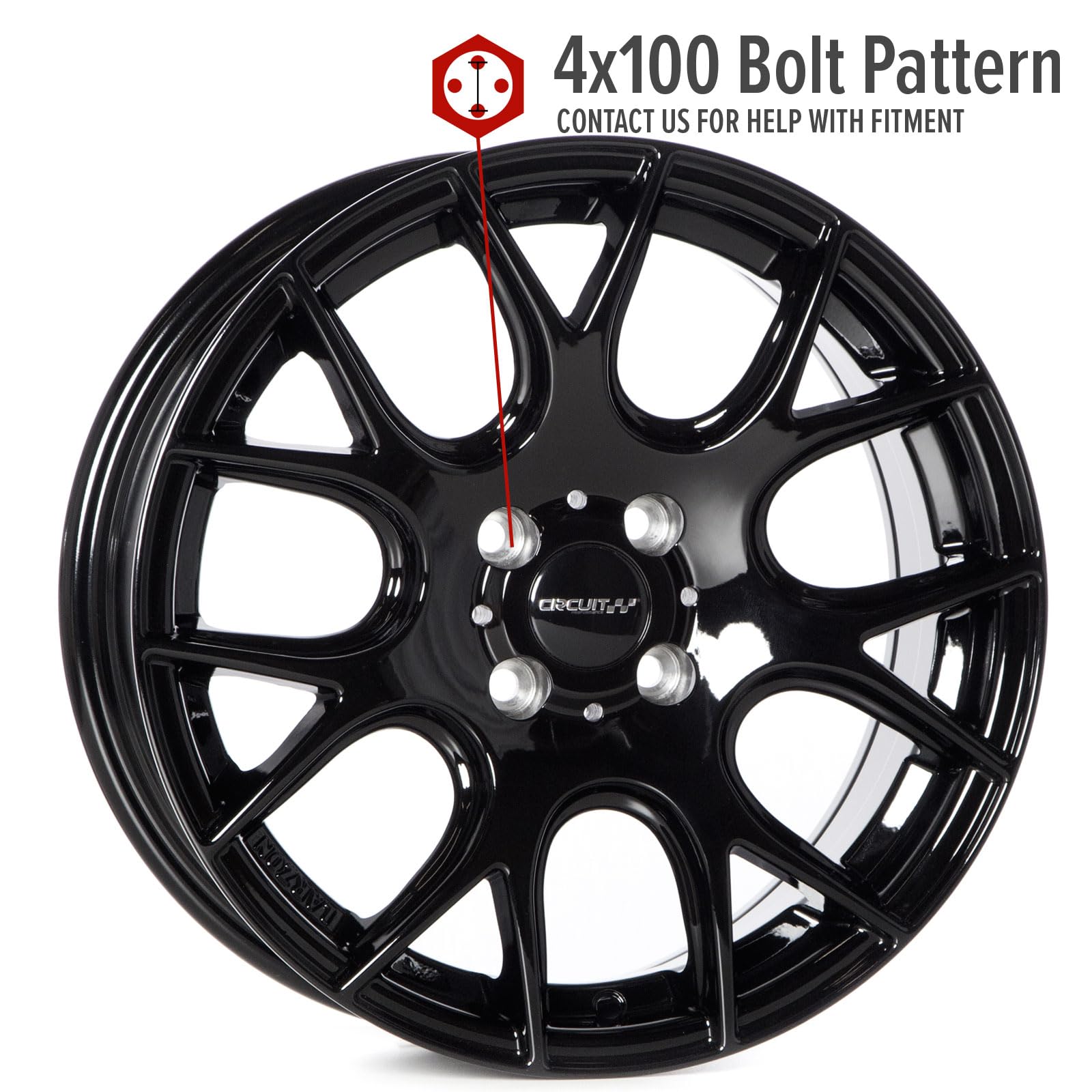
The first number is 4.
This is the number of holes. Count the lug nuts on your wheel. Are there four? Good. You are halfway there.
The second number is 100.
This is the distance in millimeters. Imagine a circle that runs through the center of all four bolts. The diameter of that circle is 100mm.
So, 4X100 simply means:
Four bolts arranged in a 100mm circle.
Why Is It So Popular?
This pattern is everywhere.
It is small. It is light.
Car makers love it for small cars.
It saves weight.
It saves space.
You will find it on cars from the 80s, 90s, and 2000s. It is the “universal language” of compact cars.
Credit: www.amazon.com
How to Measure It Yourself
Do you have a ruler? You can check this at home.
- Take off one wheel.
- Look at the holes.
- Measure from the center of one hole to the center of the hole strictly across from it.
- Is it 10 centimeters? Or 100 millimeters?
- If yes, you have a 4X100 pattern.
The Critical “Hidden” Numbers
Wait. Do not buy wheels yet.
The bolt pattern is only one part of the puzzle.
If you stop here, you might still fail.
I learned this the hard way during my time as a mechanic.
There are two other things you must check.
1. Center Bore
This is the big hole in the middle of the wheel.
It sits on the car’s hub.
If the wheel hole is too small, it won’t go on.
If the wheel hole is too big, the wheel might wobble.
Example:
A Honda Civic has a 56.1mm center hub.
A Mazda Miata has a 54.1mm center hub.
You can put Civic wheels on a Miata. The hole is bigger.
But you cannot put Miata wheels on a Civic. The hole is too small.
2. Offset (ET)
This tells you where the wheel sits.
Does it poke out?
Does it sit deep inside?
If the offset is wrong, the tire will rub your fender.
Or it will hit your brakes.
Expert Tip:
Always check these two numbers along with the bolt pattern. It saves you headaches.
Japanese Cars with 4X100 Bolt Pattern
Japan is the king of 4X100.
If you love JDM (Japanese Domestic Market) cars, you are in luck.
Most of their classic small cars use this size.
Honda: The Fan Favorite
Honda is likely the most famous user of this pattern.
Almost every small Honda before 2005 used it.
- Honda Civic: Years 1980 to 2005. (Except Type R).
- Honda CRX: All years.
- Honda Del Sol: All years.
- Honda Fit (Jazz): Most models up to 2020.
- Honda Insight: First generation.
- Acura Integra: Years 1986 to 2001 (Non-Type R).
My take:
The Civic is the easiest car to find wheels for.
You have thousands of options.
From cheap steelies to racing alloys.
Toyota: Reliable and Common
Toyota also used this pattern a lot.
Check your model year carefully.
- Toyota Corolla: Most models from 1988 to 2008.
- Toyota Yaris: Liftback and Sedan.
- Toyota Echo: All years.
- Toyota MR2 Spyder: The convertible one.
- Toyota Prius: First generation (up to 2003).
- Scion xA and xB: First generation.
Mazda: The Roadster Legend
Mazda gave us the Miata. The Miata loves 4X100 wheels.
- Mazda MX-5 Miata: Years 1990 to 2005 (NA and NB models).
- Mazda Protege: Older 4-lug models.
- Mazda 2: The small hatchback.
Why this matters:
The Miata community is huge.
Because Miatas use 4X100, there are many cool racing wheels available.
These are often light and strong.
Nissan: Small but Mighty
Nissan used this for their economy cars.
- Nissan Sentra: Models up to 2006 (some trim levels).
- Nissan Versa: Most older models.
- Nissan NX1600/NX2000: The classic coupes.
European Cars with 4X100 Bolt Pattern
Europe likes this pattern too.
Especially for their iconic classic cars.
Volkswagen (VW)
If you like “Euro style,” you need 4X100.
- VW Golf: Mk1, Mk2, and Mk3 (4-cylinder models).
- VW Jetta: Mk1, Mk2, and Mk3.
- VW Scirocco: Both older generations.
- VW Corrado: The G60 model only. (VR6 is 5-lug).
- VW Cabriolet: The classic convertible.
Note: Newer VWs switched to 5-lug.
Check your bolts before you buy!
BMW
Yes, even BMW used it.
But mostly on one legendary car.
- BMW 3-Series (E30): Years 1982 to 1991 (Except M3).
The E30 is a classic.
People love putting deep-dish wheels on these.
Just remember the offset is lower on BMWs than Hondas.
Mini Cooper
The modern Mini started with this too.
- Mini Cooper: Models from 2002 to 2006 (R50/R53).
- Mini Clubman: Older versions.
After 2007, they moved to big bolts (M14), but kept the pattern for a while.
Then they switched to 5-lug.
Be careful with Minis.
American and Other Cars
The US makers used it for their small cars.
Often, these cars were built with partners from Japan or Korea.
- Chevrolet Aveo: All years.
- Chevrolet Cobalt: Lower trim levels (4-lug).
- Chevrolet Spark: The tiny city car.
- Saturn S-Series: SL1, SL2, SC1, SC2.
- Dodge Neon: First generation (some models used 5-lug, check!).
- Ford Escort: Some older generations.

Credit: in.pinterest.com
Real-World Garage Experience: The “Wobbly” Wheel
I want to share a story.
This is about safety.
This happened to me on a track day.
I had a Mazda Miata.
I bought wheels from a VW Golf owner.
They were 4X100. They bolted on fine.
I tightened the nuts.
I felt good.
I went on the track.
At 60 mph, the car started to shake.
The steering wheel vibrated hard.
I thought my tire was flat.
I came into the pit.
The wheels were tight. What was wrong?
The Problem: The Hub Size.
The VW wheels had a big center hole (57.1mm).
My Mazda had a small hub (54.1mm).
There was a gap.
The wheel was not centered.
Only the lugs were holding it.
This is dangerous. The studs can snap.
The Fix: Hub-Centric Rings.
I bought plastic rings for $10.
They filled the gap.
The shake went away.
My Advice to You:
If you swap wheels between brands, buy hub rings.
They are cheap.
They save lives.
Do not skip this step.
How to Safely Swap Your Wheels
Ready to change your look?
Follow these steps.
I have done this hundreds of times.
1. Check Your Lug Nuts
Not all nuts are the same.
- Cone Seat: Most aftermarket wheels use this. The bottom is shaped like a cone.
- Ball Seat: Honda and VW stock wheels use this. The bottom is round like a ball.
Warning:
Never use a cone nut on a ball seat wheel.
It will crack the wheel.
It will come loose.
2. Clean the Surface
Wire brush your car’s hub.
Remove rust.
Dirt makes the wheel sit unevenly.
3. Use a Torque Wrench
Do not just stand on the wrench.
Too tight is bad. Too loose is bad.
Most small cars need 80 ft-lbs of torque.
Check your manual.
Tighten them in a star pattern.
1, 3, 2, 4.
4. The “Re-Torque” Rule
Drive 50 miles.
Then check the nuts again.
New wheels can settle.
They might loosen up.
Just checking takes one minute.

Credit: www.sonicownersforum.com
Where to Find 4X100 Wheels
You know what you need.
Now, where do you look?
The Local Junkyard
This is my favorite spot.
You can find treasure here.
Look for old BMWs or Miatas.
Sometimes you find rare BBS wheels.
They are cheap.
You just need to clean them.
Online Marketplaces
Search for “4×100 wheels” on Craigslist or Facebook.
You will see many results.
Always bring your tape measure.
Do not trust the seller.
Measure it yourself before you pay.
Brand New
Sites like Tire Rack are safe.
You enter your car model.
They only show what fits.
This is the safest way for beginners.
Frequently Asked Questions (FAQs)
Here are answers to common questions I get asked.
Is 4×100 the same as 4×4?
No, they are different. 4×100 is metric (millimeters). 4×4 is imperial (inches). 4 inches is 101.6mm. It is close, but it will not fit. Do not force it. You will bend your bolts.
Can I use adapters to change my bolt pattern?
Yes, you can. You can buy adapters to go from 4×100 to 5×114.3. However, they push the wheels out. This changes your offset. Make sure you have room in your fenders first.
What happens if the offset is wrong?
If the number is too low, the wheel sticks out. It might hit the fender on bumps. If the number is too high, the wheel sits inside. It might hit your suspension strut.
Can I drill new holes in my wheels?
Please do not do this. Some machine shops can do it, but it weakens the wheel. It is safer to just buy wheels that fit your car correctly.
Are steel wheels better than alloy wheels?
Steel wheels are strong and cheap. They are heavy. Alloy wheels are light and look better. For winter tires, I use steel. For summer fun, I use alloy.
Conclusion
Finding the right wheels is a journey.
Now you know the secrets.
You know that 4X100 is a very common size.
You know to check the center bore and offset.
You know to look at Hondas, Toyotas, Miatas, and old VWs.
Changing wheels is the best modification.
It changes the whole look of your car.
It can make it handle better.
It makes it yours.
So, go out there.
Measure twice. Buy once.
Get those hub rings.
Torque those lugs.
And drive with confidence.
You got this. Happy wrenching!