
Why Does My Car Start Shaking When Parked: Troubleshoot Now
Imagine this. You pull into your driveway. You had a long day at work. You put the car in “Park.” You turn down the radio. Suddenly, you feel it.
Thump. Thump. Thump.
Your steering wheel vibrates. Your seat feels like a massage chair gone wrong. It is unsettling. You might panic. You ask yourself, “Why does my car start shaking when parked?”
You are not alone. This is one of the most common questions I get. I have spent years working on cars. I have seen grown men scared by a little wobble.
But here is the good news. Most of the time, the fix is simple. It might not be a dead engine. It could be a small part.
In this guide, we will dive deep. We will find the cause. We will look at the solutions. We will get your car running smooth again.
Understanding the Basics: How Your Engine Should Feel
First, let’s talk about “Idle.”
Idle is when your engine runs, but the car does not move. The engine spins at a low speed. This is usually around 600 to 1000 RPM (Revolutions Per Minute).
A healthy engine hums. It should be steady. It should be rhythmic.
Think of a cat purring. It is constant. It is smooth.
Now, think of a washing machine with an uneven load. It bangs. It shakes. That is what a rough idle feels like.
My “Coffee Cup” Test
I want to share a trick I use. When a customer says their car is shaking, I do this.
I take a cup of coffee. I fill it halfway. I place it in the cup holder. Then, I watch the liquid.
If the liquid has tiny ripples, that is normal. Engines vibrate a little bit.
But if the coffee is splashing? If it looks like a storm in a cup? Then we have a problem. That is not normal. That is a “rough idle.”
This visual test helps you see what you feel. It confirms that the shaking is real.
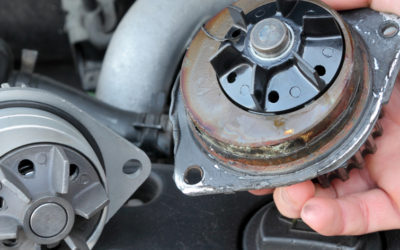
Credit: www.aamcocolorado.com
Cause #1: Worn Out Engine Mounts (The Usual Suspect)
Let’s start with the most common physical cause.
Your engine is heavy. It is a big block of metal. It contains explosions. These explosions create power. They also create vibration.
Your car frame is rigid. If you bolt the engine directly to the frame, the whole car would shake. Your teeth would rattle.
So, engineers use Engine Mounts.
What Are They?
Think of them as pillows. They are blocks of rubber sandwiched between metal plates. They sit between the engine and the car frame. They absorb the shock. They keep the vibration inside the engine bay.
How They Fail
Rubber does not last forever. It dries out. It cracks. It tears.
When a mount breaks, the engine is no longer held tight. It can bounce.
When you sit in “Park,” the engine is resting. If the rubber is gone, metal touches metal. The vibration travels right to your seat.
Engine Mounts Symptoms
How do you know if it is the mounts?
- The Shift Test: Put the car in “Neutral.” Does the shaking stop? If yes, it might be the mounts. When you are in “Drive” or “Reverse,” the engine is under tension. This makes bad mounts more obvious.
- The Clunk: Do you hear a “thump” when you press the gas? That is the engine lifting up and slamming down.
- Visual Check: Open the hood. Have a friend start the car. Have them shift from Park to Drive (with the brake on!). Watch the engine. Does it jump? A healthy engine moves a little. A bad mount makes it jump a lot.
I once worked on an old Honda. The owner thought the engine was dying. It shook so bad the mirrors were blurry. I looked under the hood. The front motor mount was snapped in two. We replaced it for $50. The car became smooth as silk. The owner could not believe it.
Cause #2: Spark Plugs and Ignition Issues
Now, let’s look inside the engine.
Your engine needs three things to run:
- Air.
- Fuel.
- Spark.
If you lose the spark, the fuel does not burn. This is called a “Misfire.”
The Heartbeat of the Engine
Imagine a team of rowers on a boat. They must row in perfect rhythm. One, two, three, four.
If one rower stops? The boat rocks. It loses speed. It feels jerky.
Your cylinders are the rowers. The spark plugs tell them when to row. If one plug is bad, that cylinder is dead weight. The engine stumbles. This causes a major shake.
Bad Spark Plugs Signs
- Check Engine Light: This is the big clue. A flashing light usually means a misfire.
- Gas Smell: If the fuel does not burn, it goes out the tailpipe. You might smell raw gas.
- Poor Mileage: You are wasting gas.
Spark plugs wear out. The gap where the spark jumps gets too wide. Or they get covered in carbon (gunk).
Replacing plugs is often cheap. It is standard maintenance. If your car vibrates when stopped at red light, check the plugs first.

Credit: www.youtube.com
Cause #3: The Vacuum Leak (The Invisible Problem)
This one is tricky. You cannot always see it. But you can hear it.
Your engine works like a vacuum. It sucks in air. It measures this air precisely. The computer adds the perfect amount of fuel to match the air.
The Leak
Imagine sucking soda through a straw. Now, poke a hole in the straw.
You get air bubbles. You don’t get much soda.
A vacuum leak is a hole in the engine’s “straw.” Air sneaks in. The computer does not know about this extra air. It adds the wrong amount of fuel.
The mixture becomes “lean” (too much air, not enough gas). The engine starves. It struggles to stay running. It shakes.
Vacuum Leak Symptoms Car Owners Miss
- Hissing Sound: Open the hood. Listen closely. Do you hear a sharp hiss? That is air escaping.
- High Idle: Sometimes the car revs up on its own. It is trying to compensate.
- Stalling: The car might die when you stop.
I keep a can of brake cleaner for this. (Be careful, it is flammable). I spray small bursts near the hoses. If the engine sound changes, I found the leak. The vacuum sucks the cleaner in, and the engine burns it.
Cause #4: Fuel System Failures
We talked about air. Now let’s talk about gas.
Your car uses “Fuel Injectors.” These are tiny nozzles. They spray gas into the engine. The spray needs to be a fine mist. Like a perfume bottle.
The Clogged Injector
Over time, gas leaves deposits. The nozzle gets clogged. Instead of a mist, it drips. Or it sprays unevenly.
This causes an uneven burn. Again, the rowers are out of sync.
The Fuel Filter
Maybe the injectors are fine. But the gas cannot get to them. A dirty fuel filter blocks the flow.
It is like trying to run a marathon while breathing through a towel. The engine gasps. It shudders.
Rough Idle Causes: Fuel Quality
Did you just get gas?
Sometimes, gas stations have “bad gas.” It might have water in it. Water does not burn.
If your shaking started right after filling up, this is likely the cause. You might just need to drive it out. Or add a “water remover” additive to the tank.
Cause #5: Air Intake and Sensor Glitches
Modern cars are smart. They use sensors to watch everything.
Two sensors are very important for a smooth idle.
1. The Mass Air Flow (MAF) Sensor
This counts the air molecules entering the engine. If it gets dirty, it counts wrong.
It tells the computer, “Only a little air is coming.” So the computer gives only a little gas. But really, a LOT of air is coming. The engine runs rough.
Fix: You can buy MAF Sensor Cleaner spray. It costs $10. You take the sensor out. You spray it clean. You put it back. Simple.
2. The Idle Air Control (IAC) Valve
This little valve controls air when your foot is off the gas pedal.
When you park, the throttle is closed. The IAC opens a bypass to let the engine breathe.
If this valve gets stuck with carbon gunk, the engine suffocates. It chokes. It shakes.
Fix: This can also be cleaned. Removing carbon buildup often solves the car shakes when idling but not driving issue immediately.

Credit: www.autotechiq.com
Cause #6: Belts, Pulleys, and The Harmonic Balancer
We have looked inside. Let’s look outside the engine block.
There is a long belt on the front. It is the Serpentine Belt. It spins the alternator, the A/C, and the power steering.
The Harmonic Balancer
This is a heavy pulley connected to the main shaft. Its entire job is to absorb vibration. It has a rubber ring.
If that rubber breaks? The pulley wobbles.
A wobbling heavy pulley will shake the whole car.
Look at your belts while the car runs.
Do they run straight?
Or do they wobble like a bent bike wheel?
If it wobbles, you found the culprit.
Situation Specifics: When Does It Shake?
Clues are everywhere. The when helps us find the why.
Car Shakes When Idling But Not Driving
This points to Vacuum Leaks or IAC Valves.
Why? Because when you drive, the throttle is open. The vacuum leak matters less. The engine is getting plenty of air. The problem is mostly noticed when the engine is barely running (idle).
Car Vibrates When Stopped at Red Light
This is often Motor Mounts.
You are in “Drive.” You are holding the brake. The engine wants to push forward. The brakes hold it back. This creates tension. Weak mounts cannot handle this tension. The vibration transfers to the frame.
Shaking With AC On
When you turn on the AC, the engine has to work harder. It spins the compressor.
If your engine is already weak (bad plugs, dirty throttle), the extra load is too much. It starts to stumble.
This could also be a bad AC Compressor pulley.
DIY Diagnosis: A Step-by-Step Guide
You want to fix this. Or at least, you want to know what to tell the mechanic.
Follow this path.
Step 1: The Visual Inspection
Pop the hood. Look for loose hoses. Look for broken wires. Look for belts that are cracked.
Step 2: The Sound Check
Listen. Do you hear hissing? (Vacuum leak). Do you hear clicking? (Injectors or valves). Do you hear a deep clunk? (Mounts).
Step 3: The Code Reader
This is your best friend.
Every car made after 1996 has an OBDII port. It is under the steering wheel.
You can buy a scanner for $20. Or, auto parts stores will scan it for free.
If the scanner says “P0300,” that is a misfire.
If it says “P0171,” that is a vacuum leak (System Lean).
Step 4: The Shake Test
Have a friend sit in the car. Put the parking brake on.
Have them shift through Park, Reverse, Neutral, Drive.
Stand safely to the side. Watch the engine.
Does it try to jump out of the hood? If yes, change the mounts.
A Quick Personal Story
My neighbor came to me last winter. Her car was shaking violently. She was terrified. She thought the transmission was broken.
I opened the hood.
I looked at the oil cap. It was missing!
She had checked her oil and forgot to put the cap back on.
This created a massive vacuum leak.
We found the cap sitting on the battery. We screwed it on.
The shaking stopped instantly.
Sometimes, the solution is that simple.
When to Call the Pros
I love DIY. But safety comes first.
You should stop driving and call a tow truck if:
- The Check Engine Light is FLASHING. A blinking light means active damage is happening. You could melt your catalytic converter. Stop immediately.
- You hear loud metal grinding. This could be a broken internal part.
- You smell strong fumes or see smoke. Fire is a real risk.
Also, be honest about your skills. Changing an air filter is easy. Changing a rear engine mount can be very hard. You might need to lift the engine. If you don’t have the tools, pay a pro. It is worth it.
Conclusion: Smooth Sailing Ahead
So, why does your car shake?
It could be a tired rubber mount. It could be a dirty sensor. It could be a worn-out spark plug.
It feels scary. But it is usually fixable.
Start with the easy stuff. Check the codes. Look for leaks.
Don’t ignore it. A shaking car is asking for help. If you fix it now, it stays cheap. If you wait, it gets expensive.
You have the knowledge now. You know what to look for.
Go check your car. Find the shake. Smooth out the ride.
Happy driving!
Frequently Asked Questions
Why does my car shake when I stop at a red light?
This is often due to worn engine mounts. When in “Drive” with the brakes on, the engine is under load. Bad mounts allow vibration to transfer to the chassis. It could also be a vacuum leak affecting the idle.
Can low oil cause a car to shake?
Yes, extremely low oil prevents proper oil pressure. This affects the variable valve timing. The engine will run roughly and may shake. Always check your oil level first.
Is it safe to drive a car that is shaking?
It depends on the severity. Mild vibration is usually okay for a short trip to the mechanic. Violent shaking or a flashing check engine light means you should stop driving immediately to prevent damage.
How much does it cost to fix a shaking car?
It varies wildly. A spark plug might cost $10. A vacuum hose is $5. However, replacing all engine mounts could cost $300 to $600 depending on the mechanic and the car model.
Why does my car shake when I turn on the AC?
The AC puts a heavy load on the engine. If your idle control valve is dirty or your throttle body is clogged, the engine cannot compensate for this extra load, causing it to shake or idle roughly.
Can bad gas make my car shake?
Yes. Fuel with water or contaminants won’t burn properly. This causes misfires and rough idling. If shaking starts right after filling up, bad fuel is the likely culprit.